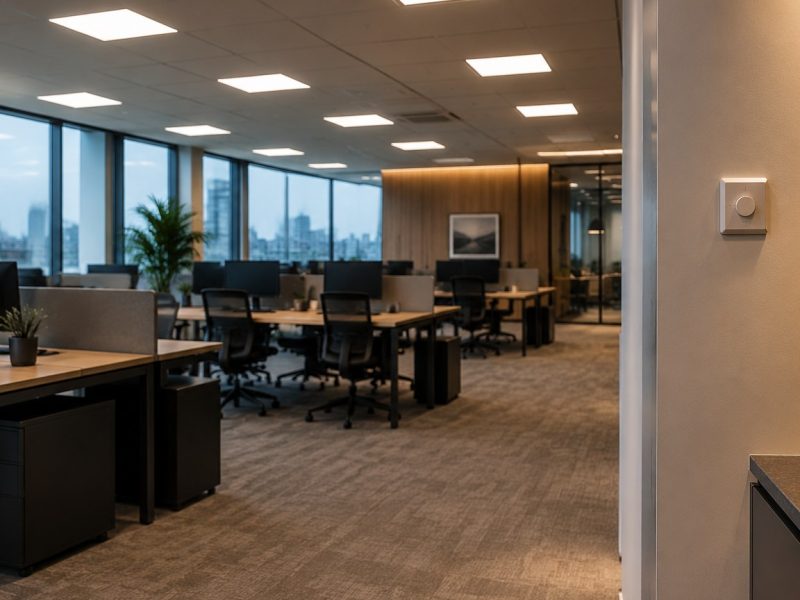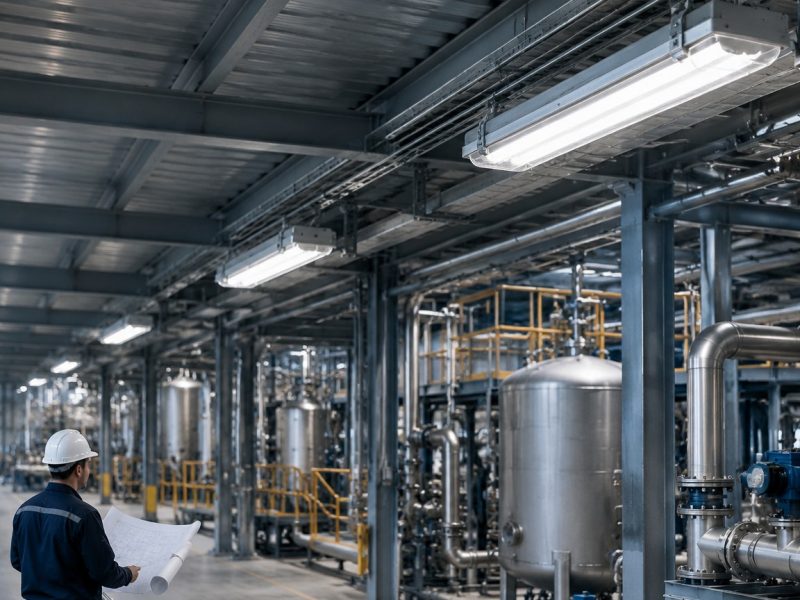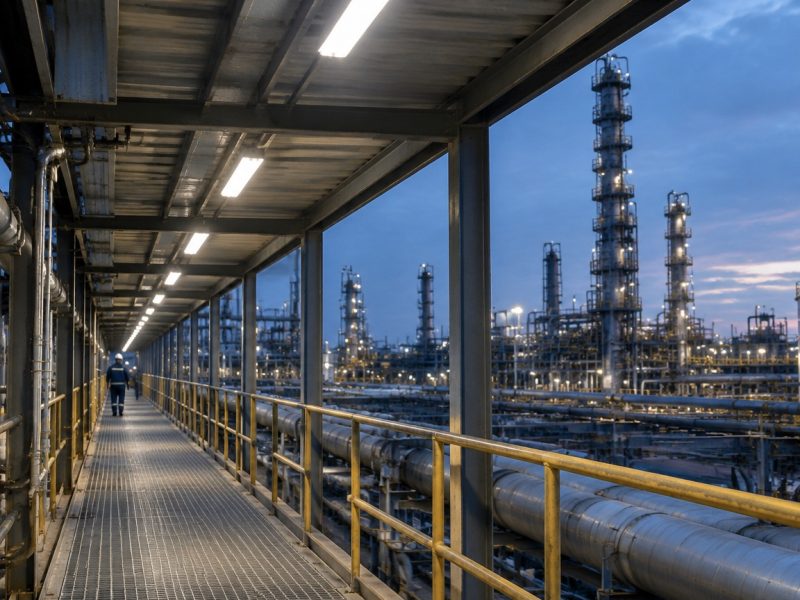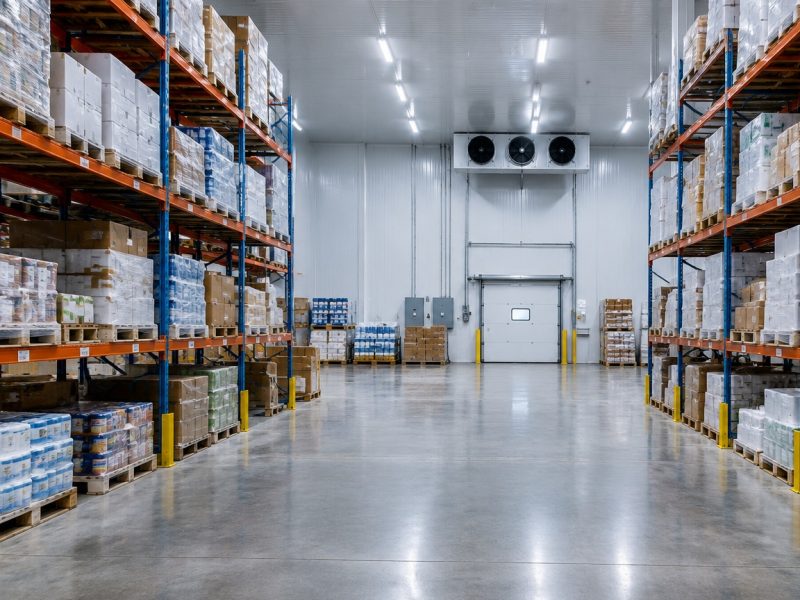

A weatherproof LED batten with sensor should respond to the way people and vehicles actually use the building. For project buyers, the important comparison is whether the complete fitting detects arrivals early enough, maintains appropriate visibility and avoids unnecessary operation in adjacent areas.
Prepare a purchasing schedule that separates full-load power, standby power, mounting height, detection coverage and control grouping. A low light-output setting does not necessarily mean the same percentage of electrical consumption. Measure the offered configuration before using that percentage in a savings forecast.
Match control behaviour to each area
A service corridor, parking aisle and warehouse picking route have different movement patterns. Someone approaching along the centreline may not produce the same response as someone crossing the detection field. Racking, partitions, vehicle bodies and open doors can change practical coverage.
Use this commissioning matrix as a trial proposal, not universal requirements or confirmed settings for every model.
| Test area | Initial hold-time trials | Reduced-light trials | What the team checks |
|---|---|---|---|
| Intermittent service corridor | 60 and 180 seconds | 10% and 20% light output | Detection before entering the dim zone; visibility at both settings |
| Parking pedestrian route | 180 and 300 seconds | 20% and 30% light output | People walking beside vehicles and between columns |
| Warehouse picking route | 300 and 600 seconds | 20% and 30% light output | Stationary pickers, trolley movement and cross-traffic |
Only test values supported by the chosen driver and sensor. Retained illumination must meet the project requirements; a percentage alone cannot establish that. For the wider application, use our parking-garage lighting guide.

Distinguish presence and absence levels
Lena Lighting describes a specific corridor-control arrangement that changes between 10% and 100% luminous flux after movement detection. This illustrates one implementation, not a standard feature of all battens. See its corridor-function explanation.
Ask whether the offered configuration has a hold time, reduced-output period and final switch-off stage. Two quotations can both say sensor dimming while one retains background light indefinitely and another switches off. Confirm behaviour after power restoration and how occupied neighbouring zones affect a group.
A hypothetical circular detection field with a 6 m diameter covers approximately 28.3 m² on an unobstructed plane: pi × 3². It does not establish reliable coverage of a 28.3 m² room containing racks and vehicles. Assess the detection drawing at the actual mounting height and direction of approach.
Calculate savings using electrical input
Consider an illustrative installation of 20 fittings drawing 36 W each for 4,000 hours annually. Continuous full output consumes 20 × 0.036 × 4,000 = 2,880 kWh.
Assume instead 1,200 hours at full power and 2,800 hours at a measured reduced input of 6 W per fitting. Consumption becomes 20 × (0.036 × 1,200 + 0.006 × 2,800) = 1,200 kWh. The difference is 1,680 kWh, or $252 at an assumed $0.15/kWh.
| Measured reduced input | Annual controlled energy | Difference from continuous full power |
|---|---|---|
| 4 W per fitting | 1,088 kWh | 1,792 kWh |
| 6 W per fitting | 1,200 kWh | 1,680 kWh |
| 9 W per fitting | 1,368 kWh | 1,512 kWh |
These examples exclude additional network equipment and assume the stated operating pattern. Do not replace measured watts with a light-output percentage. Our retrofit payback guide explains the wider investment calculation.
Check the complete weatherproof assembly
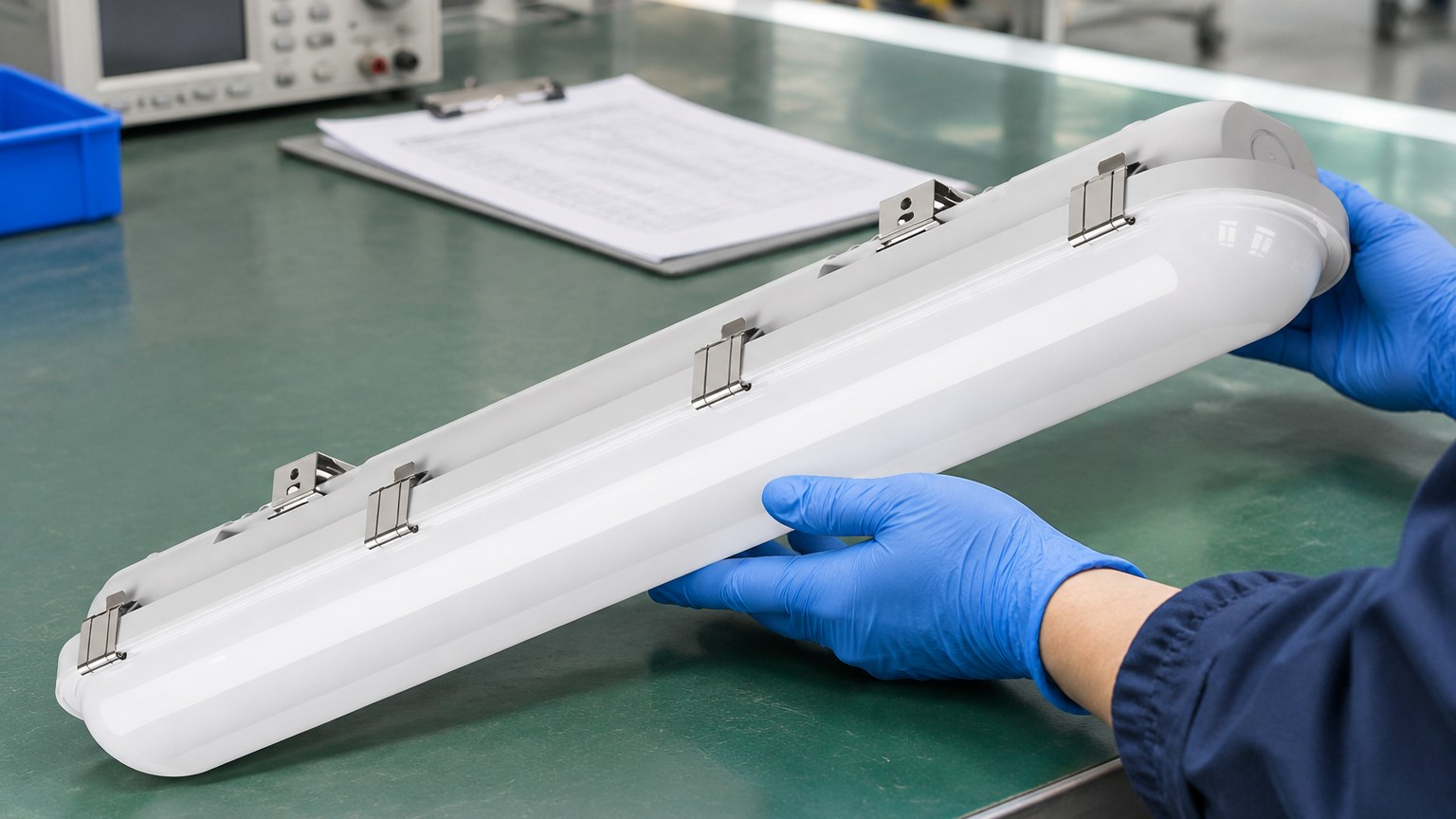
Adding a sensor changes the assembly. Confirm its position, cable entries, sealing arrangement and the declared protection of the completed fitting. A housing rating does not automatically establish the rating after modification.
CoolShinePro’s 4ft 36W vapor-tight fixture is a real reference for the base luminaire. Sensor availability and its resulting configuration must be confirmed separately. Neither emergency operation nor chemical resistance follows from an ingress-protection statement.
Test movement, grouping and commissioning access
During a pilot, record approach direction, mounting height, obstacles and response time. Walk from both ends, stop at the task position and repeat with doors in their normal positions. Waving a hand directly under a fitting is insufficient for an aisle project.
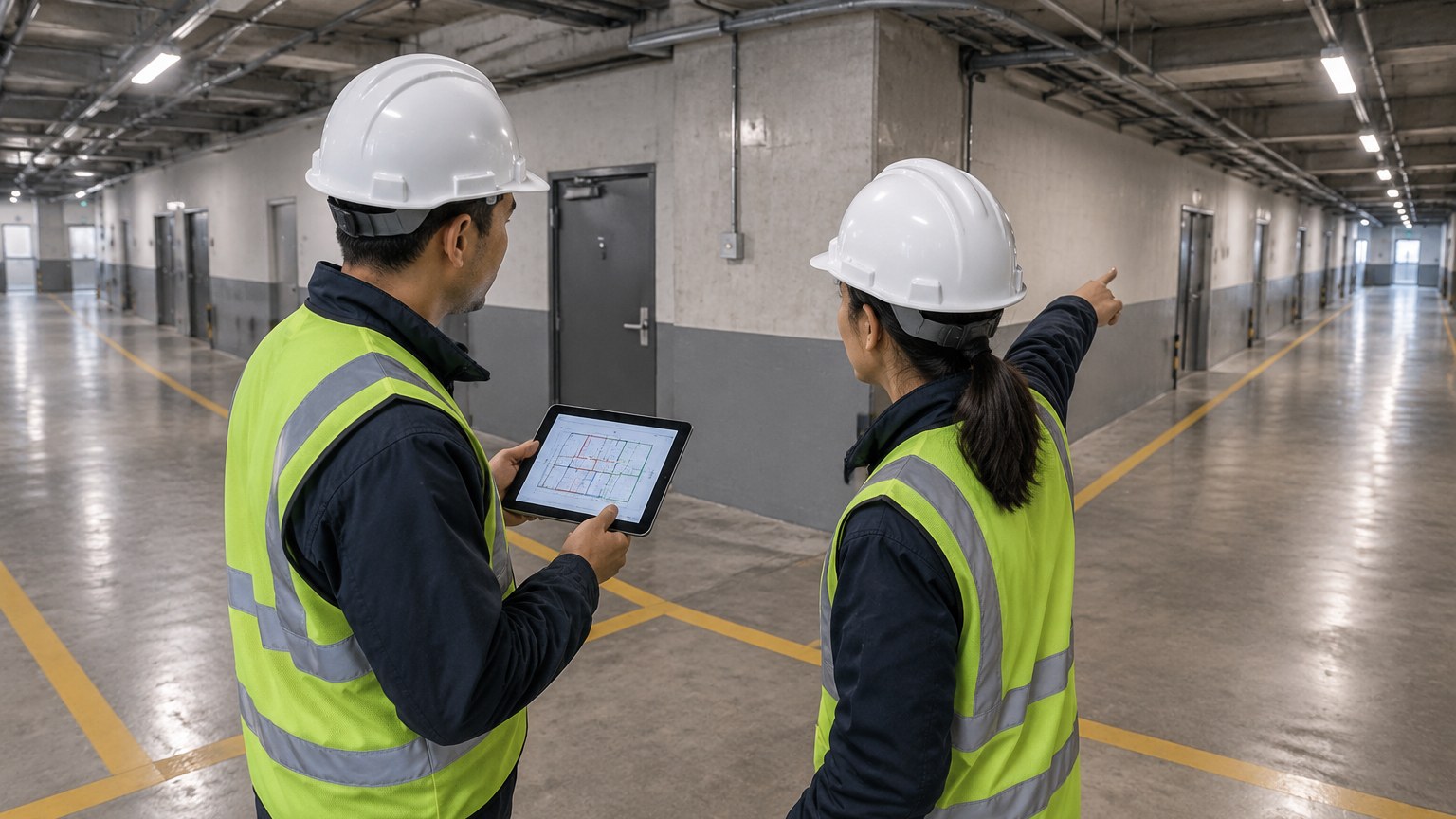
For a hypothetical 12-fitting aisle in three groups of four, compare independent and linked operation. Check whether the next section becomes visible before someone reaches it, and whether cross-traffic activates unnecessarily large areas. Preserve the required safety illumination throughout.
Specify who can change settings after handover. A commissioning remote, accessible controls and a written grouping schedule can affect maintenance more than a small unit-price difference. Include them in the offer.
Send a configuration-specific enquiry
Provide quantity, voltage, mounting height, layout, working hours, target control behaviour and required records. Request full and reduced input power, detection drawings, adjustment ranges and the final assembly’s protection declaration.
Approve the sample with its driver, sensor and settings together, then retain that combination for production. For aisle geometry, see our warehouse racking and picking guide.