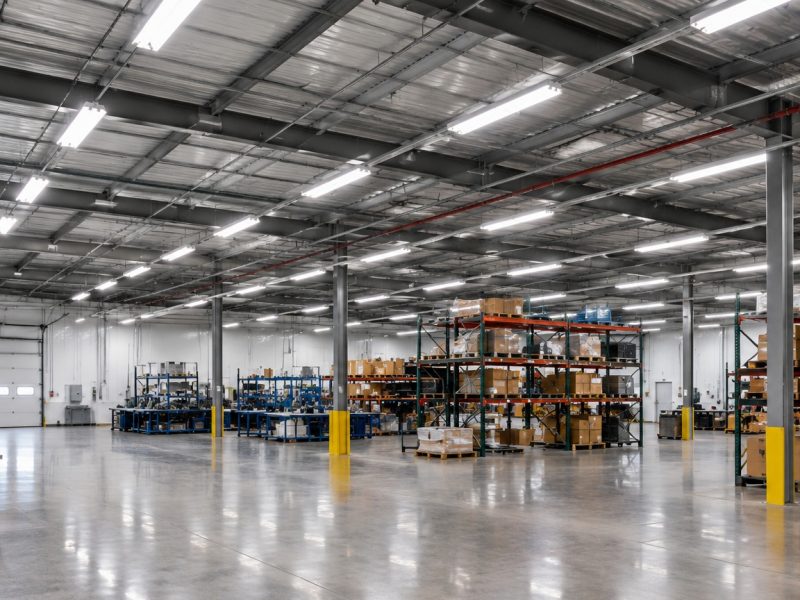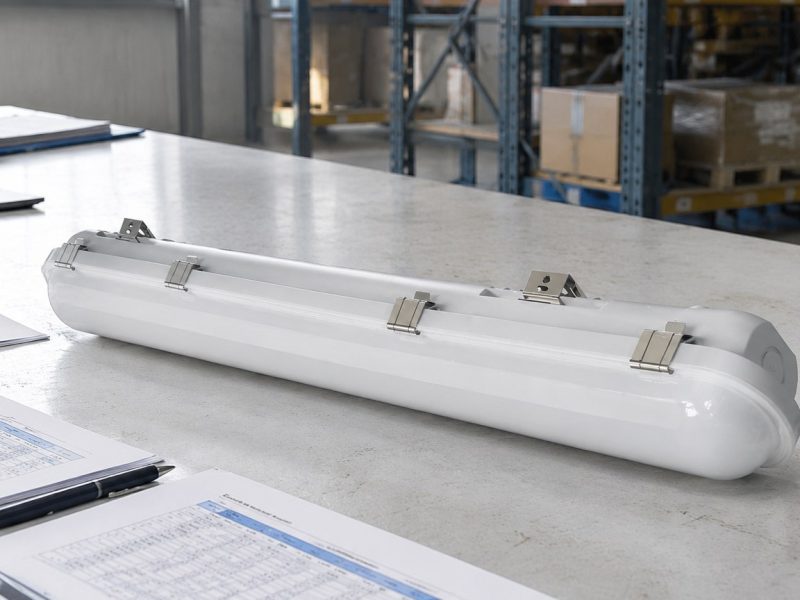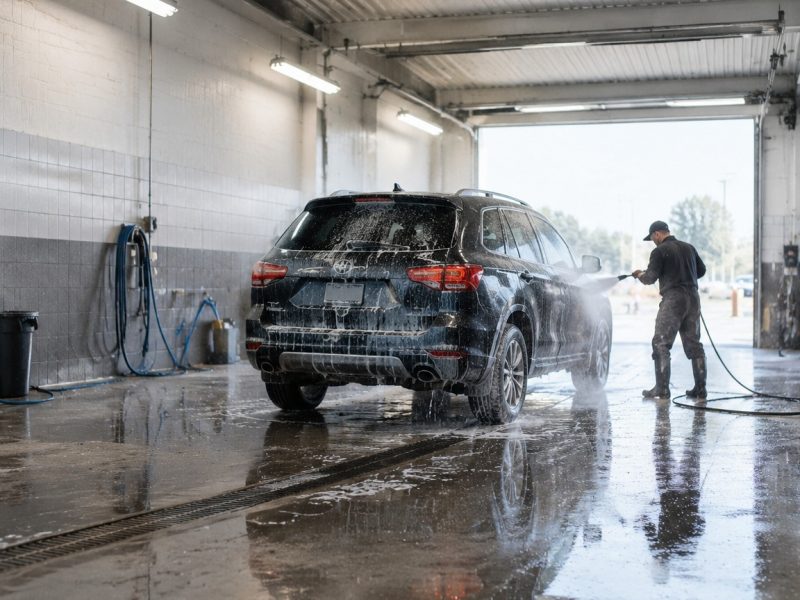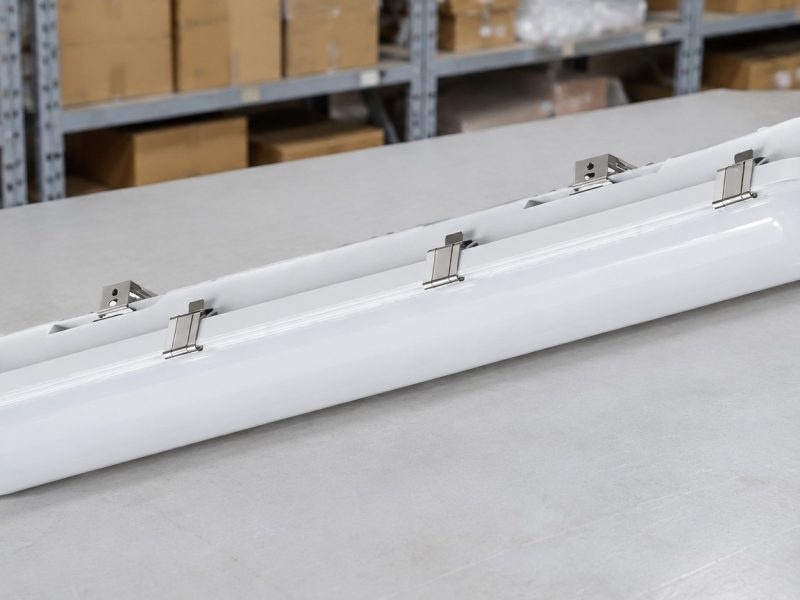
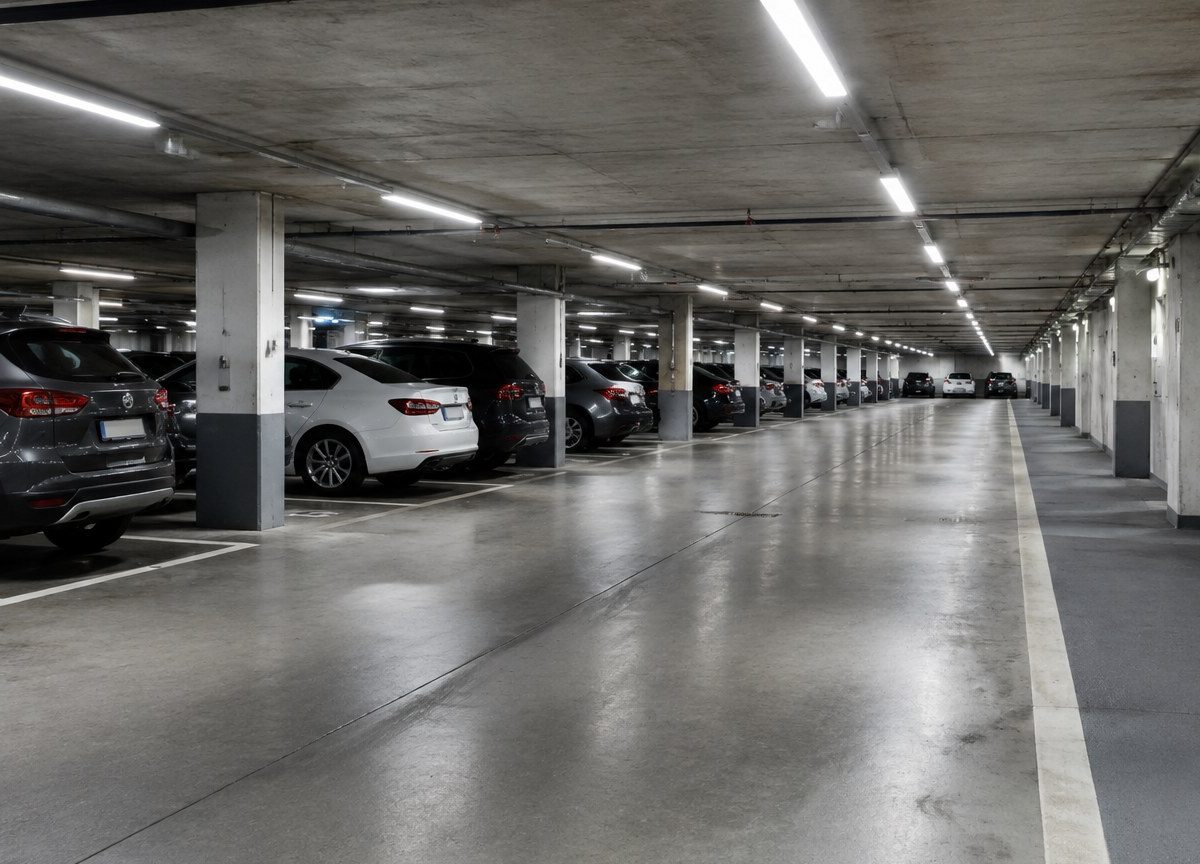
For a parking garage, select tri-proof lighting by separating enclosure protection, useful light on the floor and circulation routes, impact exposure and controls. IP65 is a practical specification to examine for dust and water-jet exposure; IP66 addresses more powerful jets. Neither number defines how many lumens the garage needs or proves that the lighting layout is adequate. The sections below turn those labels into measurable comparisons.
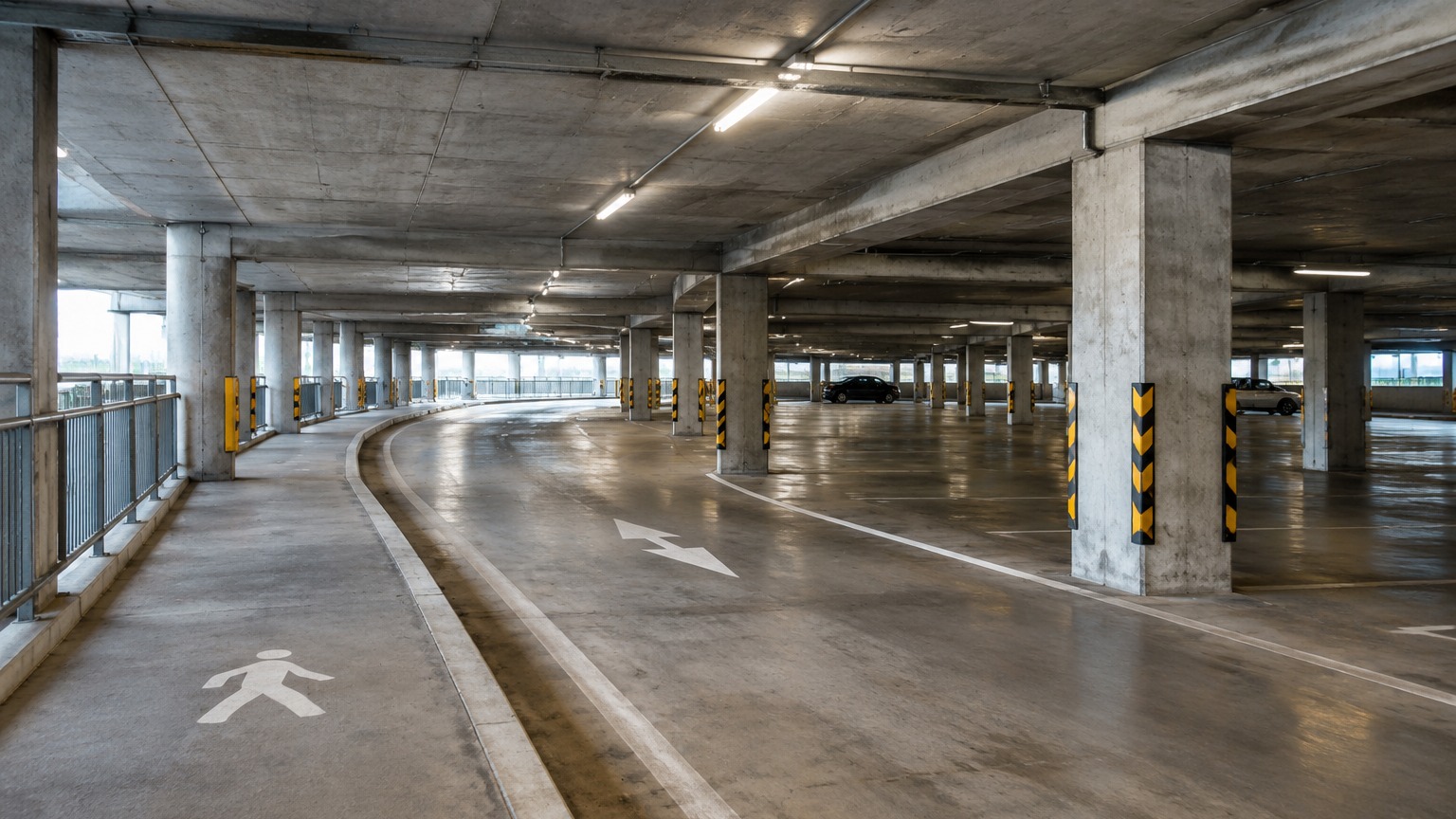
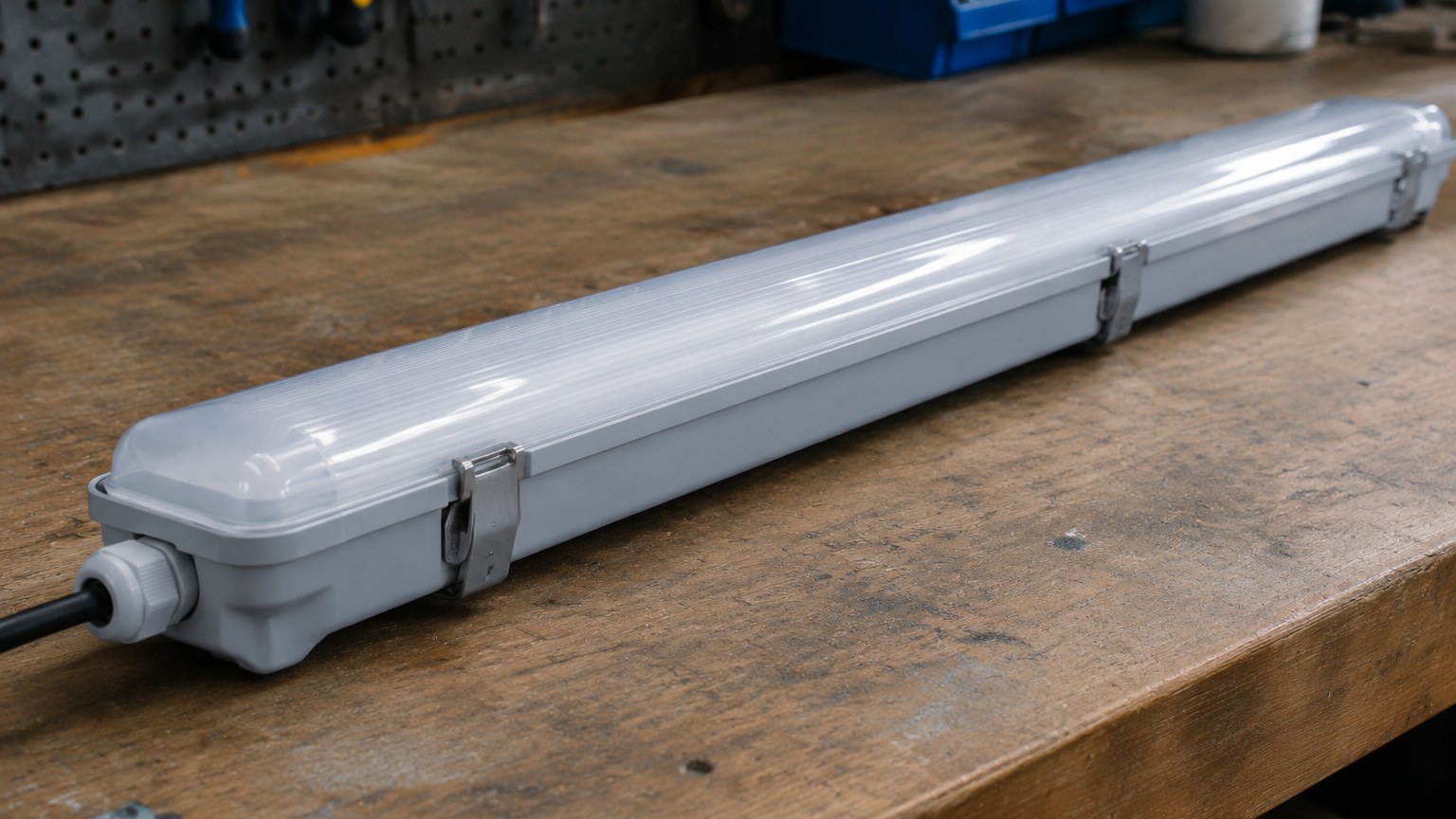
Start with the conditions at the installation and the project lighting requirements. Then ask suppliers to propose a documented configuration. A sealed-looking linear fixture, an IP label or a high lumen figure cannot establish that the whole project has been designed correctly.
Describe the garage before selecting the fitting
IP65 uses a first digit of 6 for dust-tight protection and a second digit of 5 for water jets. IP66 retains the dust protection but increases jet protection to level 6. For IPX5, the test uses a 6.3 mm nozzle, 12.5 L/min flow and 2.5–3 m distance for at least 3 minutes. This helps distinguish occasional moisture, cleaning spray and stronger water exposure without pretending that one IP rating covers every washdown method.
An enclosed basement and an open-sided parking deck can expose luminaires to different conditions. Record where fixtures may encounter wind-driven rain, condensation, dust, cleaning spray or corrosive substances. Include low-clearance locations, ramps, entrances, pedestrian routes and any areas subject to physical impact.
Also tell the supplier how the space is cleaned and maintained. A fixture selected for occasional moisture should not automatically be assumed suitable for every washdown method or chemical exposure. Ask for the conditions and limitations behind the proposed model’s documented ratings.
The term tri-proof is used in product marketing and should not replace a data sheet or the applicable installation assessment. Similarly, vapor-tight construction does not establish suitability for a hazardous atmosphere. Our guide to vapor-tight versus explosion-proof lighting explains why those categories should not be interchanged.
Design for useful visibility, not only a bright floor
Use a calculation example to separate lumens from lux. Assume ten 4,000 lm fixtures over 100 m², a utilization factor of 0.6 and a maintenance factor of 0.8. The estimated average is 10 × 4,000 × 0.6 × 0.8 ÷ 100 = 192 lux. These are example inputs, not a prescribed garage target. This estimate cannot show the darkest point behind a column or the vertical light reaching a pedestrian; the actual IES file and layout are needed for those checks.
Parking-garage lighting must be evaluated where people drive, walk, turn and identify obstacles. Columns, beams, parked vehicles and ramps can interrupt light. A layout that appears bright directly below each fixture may still leave inconvenient dark areas between them.
Ask for a lighting calculation based on the actual geometry, mounting positions and selected luminaire’s photometric file. Identify the required evaluation areas and the governing project criteria with the designer. Avoid accepting a fixture count based only on dividing a total lumen figure by the floor area.
The US Department of Energy’s parking-structure lighting specification provides a useful procurement reference for considering photometric performance and uniformity. It is an example specification, not a universal code for every country or a substitute for current local project requirements.
Check the housing and installation details together
Impact protection has its own code: IK08 represents a 5 J impact test, independently of the IP rating. An IP65/IK08 fixture therefore communicates two different enclosure characteristics. Neither establishes corrosion resistance or hazardous-area suitability. For low ceilings, the complete installed height—including brackets, glands and any suspended arrangement—also matters for vehicle clearance.
Where impact or corrosion is a concern, request separate information addressing those exposures. Do not infer chemical resistance, impact performance or fire-related suitability from an ingress rating alone. Explain the actual site conditions and ask the supplier to state what it can document.
If long linear rows are proposed, confirm the permitted electrical arrangement, connectors, mounting supports and driver access. Check vehicle clearance and the ability to reach the fitting safely for inspection and maintenance.
Plan controls before ordering drivers
Occupancy controls and daylight-responsive operation may be useful in garages with intermittent activity or open edges. Their effectiveness depends on zoning, sensor placement and what happens when the area is unoccupied. Define the intended behavior rather than simply requesting a sensor version.
The Department of Energy’s exterior lighting controls guidance addresses planning and specification for exterior and parking-structure controls. Use it as background when developing the controls brief; applicable energy and safety requirements still need to be checked for the project location.
Emergency lighting is a separate requirement. Do not assume that adding a sensor or battery makes a standard fixture suitable for the required emergency function. Have the responsible designer specify the arrangement and ask for documentation for the exact equipment proposed.
Compare quotations on a common schedule
Put light output, power and operating time on the same line. For example, a 40 W fixture delivering 5,000 lm has an efficacy of 125 lm/W. At 12 hours per day, it uses 175.2 kWh per year; a 36 W alternative uses 157.68 kWh. If both achieve the same required lighting result, 100 fixtures differ by 1,752 kWh per year, or $262.80 at an illustrative $0.15/kWh. These are transparent comparison assumptions, not quoted product performance or guaranteed project savings.
Use the numerical references below to build a garage specification. The enclosure and impact codes describe their respective test classifications; the power and output row is an explicit comparison example, not a fixed garage lighting target.
| Garage condition / decision | Dimension | Numerical reference or example | Selection meaning |
|---|---|---|---|
| Dust plus water-jet exposure | Ingress protection | IP65: dust digit 6, water digit 5 | Examine the exact fixture and cleaning conditions |
| Stronger water-jet exposure | Ingress protection | IP66: dust digit 6, water digit 6 | Higher jet protection does not establish chemical or hot-wash resistance |
| Comparing the water tests | Nozzle and water flow | IPX5: 6.3 mm, 12.5 L/min; IPX6: 12.5 mm, 100 L/min | Controlled laboratory tests, not unrestricted site washing instructions |
| Mechanical-impact exposure | Impact classification | IK08 corresponds to 5 J | Impact and ingress protection are independent |
| Comparing light output and power | Luminaire efficacy example | 5,000 lm ÷ 40 W = 125 lm/W | Keep the actual optical result on the same basis |
| Comparing operating energy | 12 h/day, 365-day example | 40 W: 175.2 kWh/year; 36 W: 157.68 kWh/year | Difference: 17.52 kWh per fixture, if both achieve the required lighting result |
Record the actual supply, driver/control configuration, mounting accessories, maintenance access and warranty alongside these comparisons. Lumen output alone cannot establish the darkest point or the required layout.
A common schedule prevents a cheap standard model from being compared with a more fully configured quotation. Ask suppliers to separate the base fixture, controls, mounting accessories and any optional equipment so the scope is visible.
Review a sample before approving the whole garage
Include a section with a column, a turn or a daylight transition in the trial, rather than judging only the light directly under one fitting. Compare normal output, reduced output and restart behaviour with the intended controls. Record the fixture and driver configuration, mounting arrangement and measured results so the approved sample can be reproduced in the bulk order.
Use the sample to inspect the enclosure, installation process and optical appearance. Test the proposed driver and controls. If practical, install a small trial area that includes a difficult location such as a turn, column line or transition from daylight.
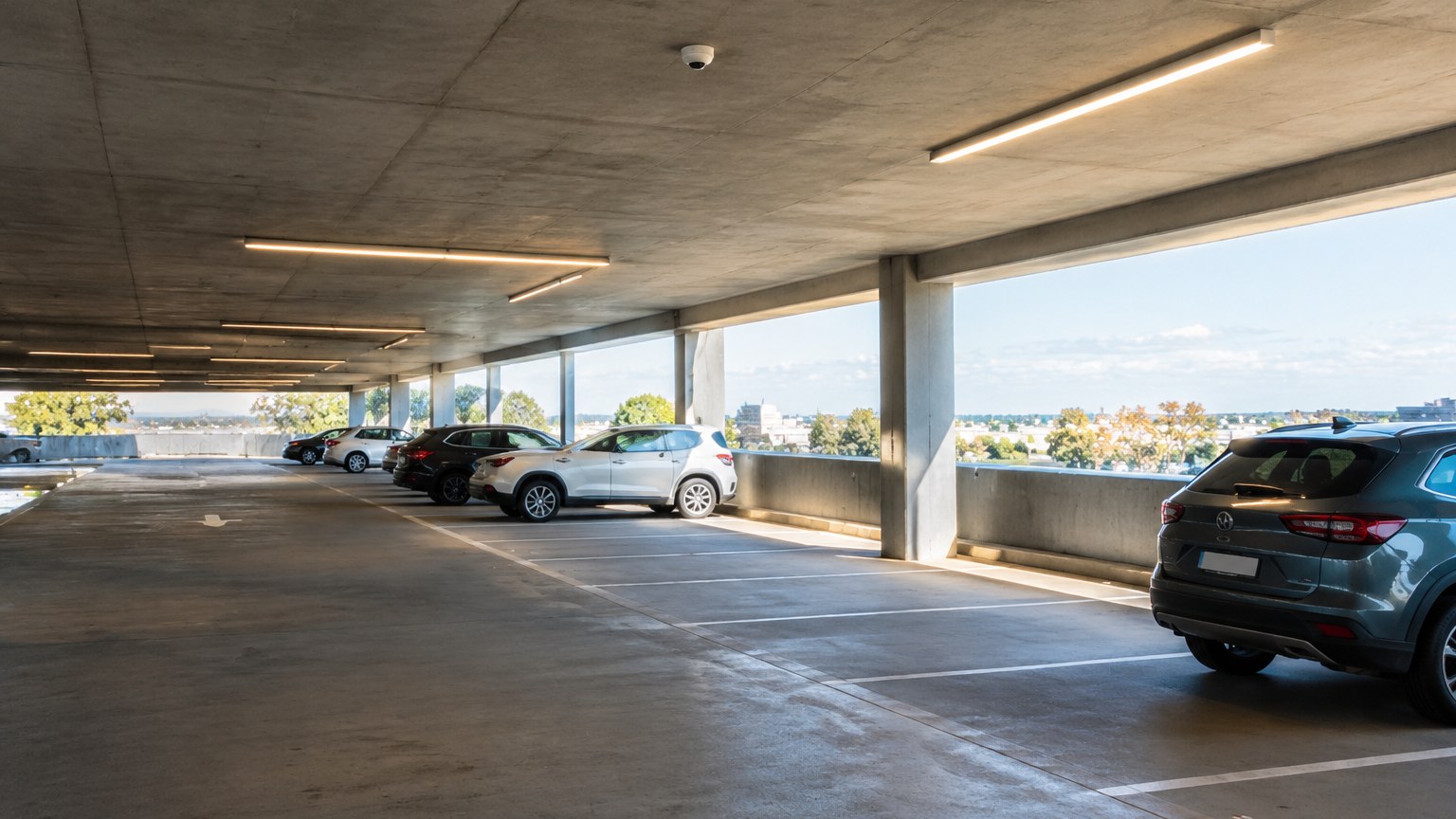
Record the accepted model, configuration and documents. A sample approval should not be treated as approval of a differently configured production unit. Agree on how any substitution will be reviewed and what inspection information will accompany the order.
CoolShinePro’s six-foot IP65 tri-proof light and four-foot vapor-tight fixture provide starting points for a product discussion. Their listed configurations do not establish that either is suitable for every garage; confirm the exact supply, mounting, controls and compliance requirements before selection.
Frequently asked questions
Are tri-proof lights automatically suitable for all parking garages?
No. Check the actual environment, model documentation, installation conditions and lighting design. Open decks, enclosed basements and specialist areas can require different solutions.
Is an IP rating enough to approve a fixture?
No. Ingress protection addresses a particular aspect of enclosure performance. You still need to assess optics, electrical suitability, impact or corrosion where relevant, controls, mounting and applicable market requirements.
Can I replace existing fixtures one for one?
Only after checking the new distribution, mounting positions, supply and lighting results. A replacement may change coverage even when its nominal output appears similar. Use the actual layout and selected product’s photometric information.
Should sensors switch every light completely off?
Do not assume so. The control strategy must be coordinated with the project’s operating, safety and emergency-lighting requirements. Agree on zoning and any reduced-output state with the responsible designer.
What information should I send to get a useful quotation?
Provide plans, mounting heights, site photographs, exposure and cleaning conditions, supply details, control preferences and the requirements set by your designer. Use our tri-proof supplier selection guide for supplier due diligence, then contact CoolShinePro with the project brief.