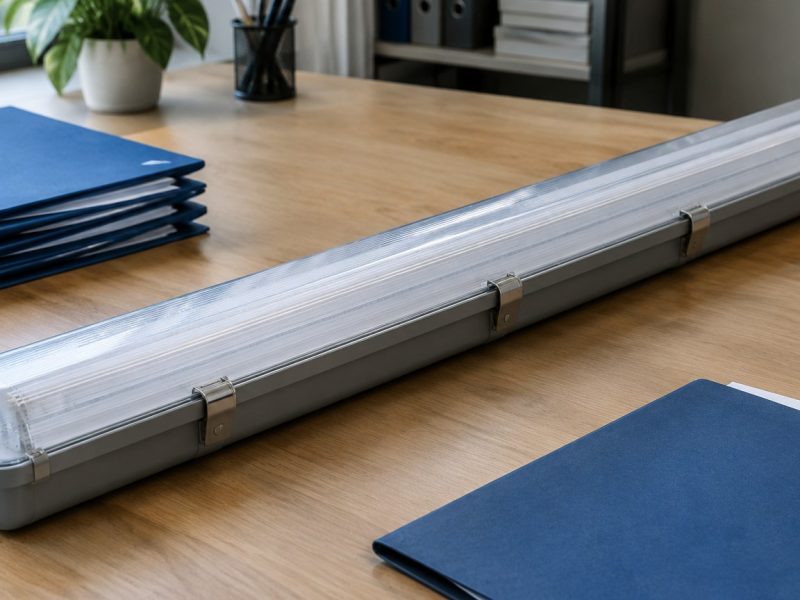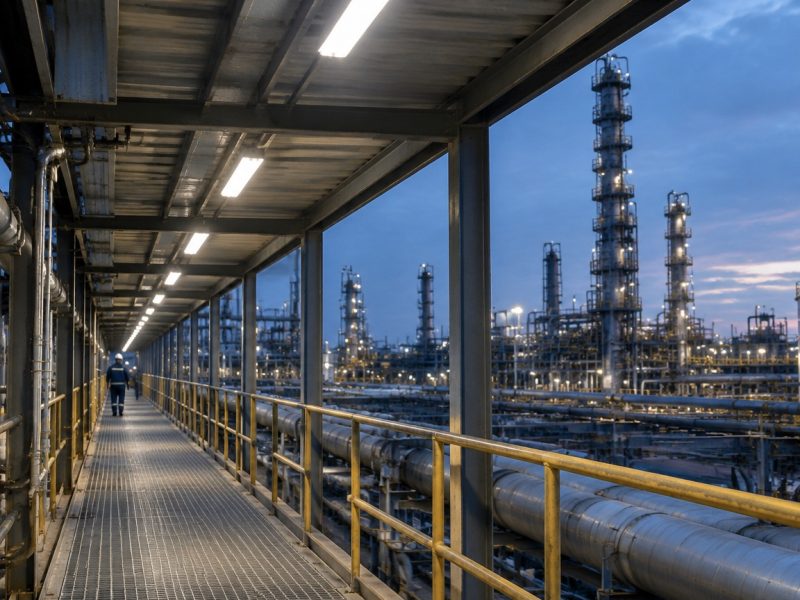
An LED explosion-proof light retrofit begins with the approved hazardous-area classification and a survey of what is already installed. Similar wattage, length or mounting appearance does not make a replacement interchangeable. Survey the location before requesting a price, and have a competent project team verify the exact configuration against local requirements.
Record the existing fitting and installation
Collect the model, markings, mounting arrangement, supply, cable entries, ambient conditions and maintenance access. Record the actual support points and any obstruction rather than measuring only the nominal fitting length. Do not open equipment or disturb entries as part of a visual survey. Where inspection requires access or isolation, follow the site’s approved work procedure.

Keep approval evidence specific to the jurisdiction, area classification and assembly. See our ATEX vs IECEx lighting guide for background. The markings and instructions for the offered model must cover the actual installation, not just a similar product in the same catalogue.
Separate fit problems from approval problems
| Illustrative site finding | Example comparison | Procurement decision |
|---|---|---|
| Mounting centres differ | Existing supports 600 mm apart; proposed fitting drawing shows 650 mm | Request an approved support arrangement; do not assume the old bracket can be drilled |
| Service clearance is limited | 180 mm available; approved service drawing requires 250 mm | Resolve the 70 mm shortfall before ordering |
| Cable entry differs | Existing entry identified as M25; offered configuration is M20 | Review the documented entry arrangement; do not improvise a reducer |
| Load increases | Existing fitting 8 kg; proposed fitting 11 kg | Review the support and fixing design for the new load and actual conditions |
The dimensions and loads are examples, not product specifications. The support check also needs the actual mounting orientation and site conditions. Manufacturer instructions can require specific brackets and accessories; see this Eaton luminaire instruction sheet as an example, not approval for other fittings.
Compare light at the task, not the wattage alone
A hypothetical old 80 W luminaire and new 80 W luminaire can distribute their output differently. If the project survey records an average of 150 lx but only 45 lx at a critical point, the minimum-to-average ratio is 0.30. A proposed layout with 150 lx average and 75 lx at its minimum gives 0.50. These numbers illustrate why equal average illumination can conceal different visibility; they are not targets for a hazardous site.
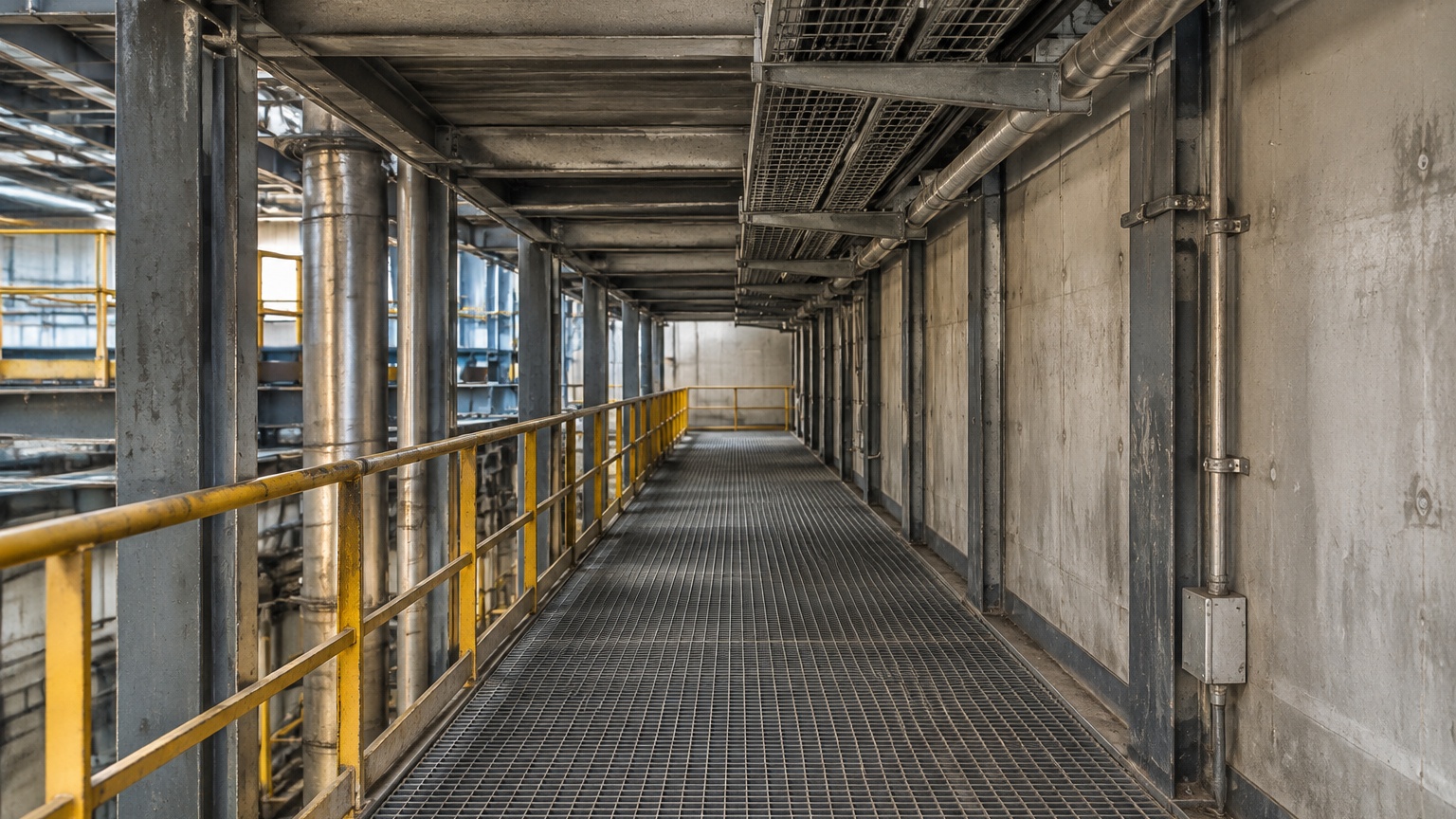
Request a photometric file for the actual optic and mounting arrangement. Check aisles, stairs, inspection points and shadows from equipment. Evaluate any emergency duty separately. Keep ordinary operating performance and hazardous-location suitability as separate acceptance decisions.
Build the retrofit quotation by location
Group positions that share the same requirements and identify exceptions. In an example 40-position survey, 32 might share the same documented mounting and 8 might require individual review. Keep the eight exceptions visible rather than hiding them in a single unit price. Request separate lines for approved mounting hardware, documented entry accessories, access equipment and commissioning.

Specify whether the offer is a complete replacement or an approved retrofit kit for a named existing assembly. Do not mix hardware across configurations without documented approval. Release the order only when the site survey, exact product documentation and proposed installation method agree.