An LED tri proof light price is useful only when it describes the configuration you are buying. Two quotations for a 36W fitting can include different drivers, control functions, mounting accessories, packaging and delivery terms. A lower unit price can therefore produce a higher project cost.
For distributors and contractors, the strongest starting point is a common quotation schedule: one specification, clearly separated options and the same quantity breaks. This guide shows how to compare bulk offers using concrete calculations rather than an unsupported market-price range.
Define the fitting before comparing the price
Use a product schedule that fixes power, supply voltage, housing, protection rating, light output and control version. Keep a separate column for optional functions. A dimming version and a non-dimming version should not disappear inside one average price.
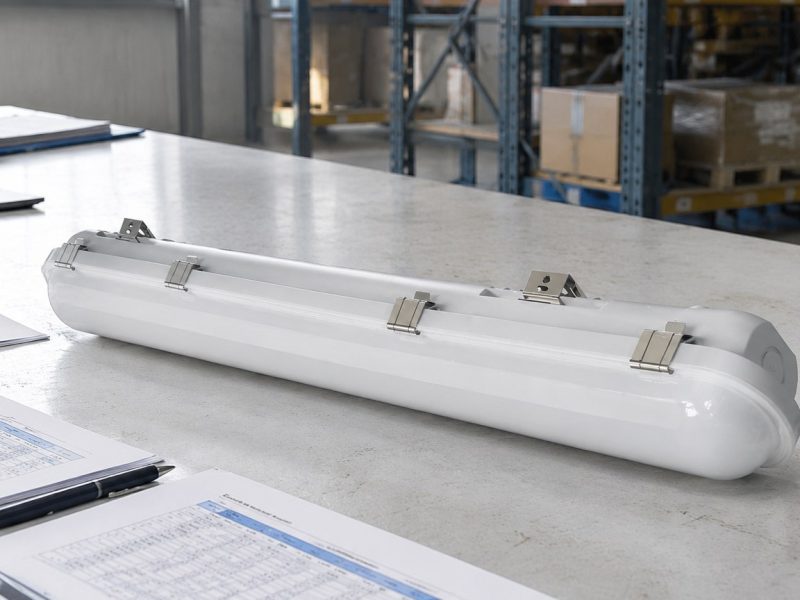
CoolShinePro’s 4ft 36W LED vapor-tight fixture provides a practical reference: its documented specification includes IP66, PC housing and diffuser, 200–240V AC at 50/60Hz, Ra 80, and 3000K/4000K/5000K selections. The selected order configuration still needs to identify power and controls. These supply details do not establish suitability for a 277V project.
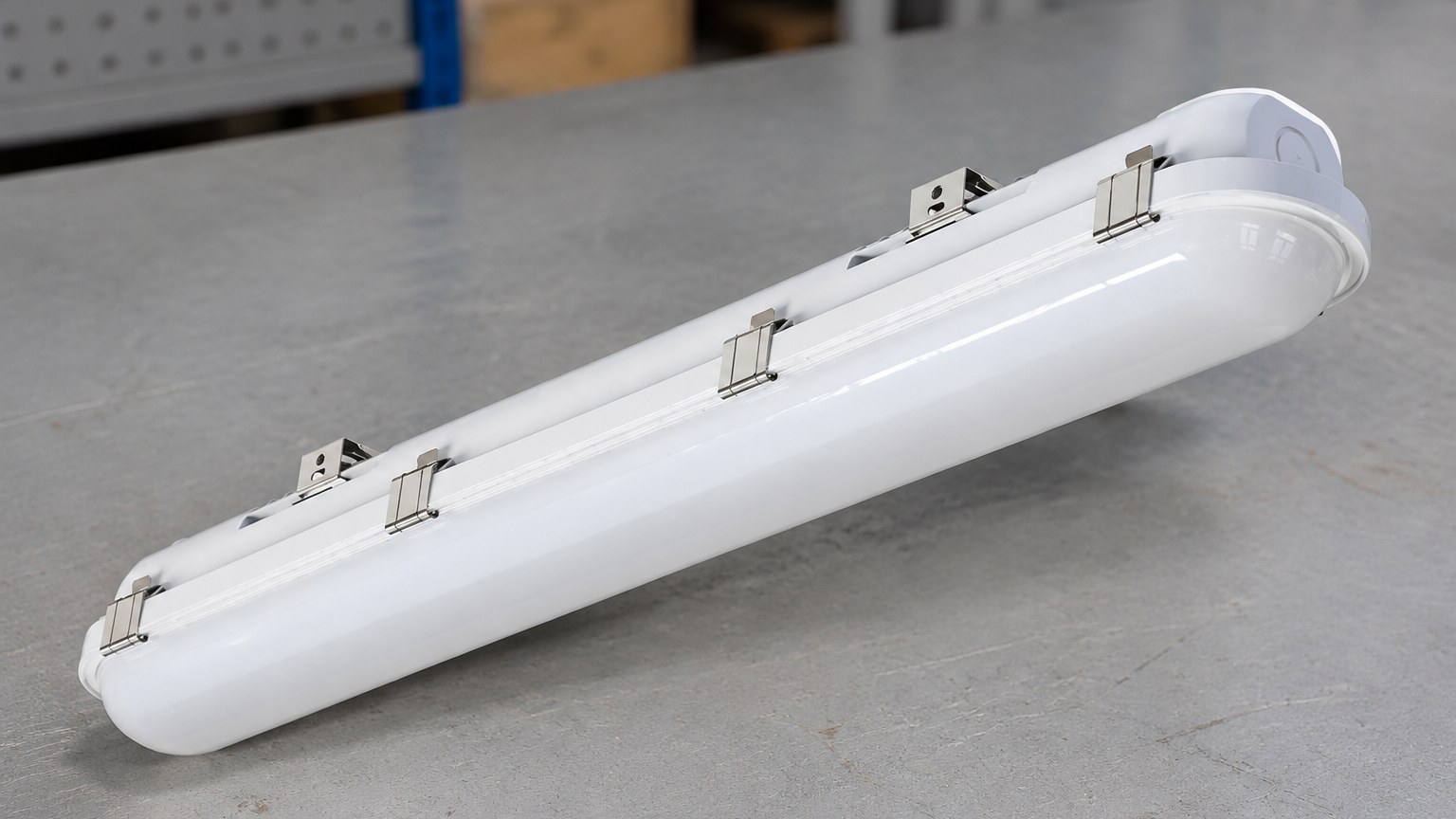
At a stated efficacy of 120 lm/W, a 36W configuration gives an arithmetic reference of 4,320 lumens. Use the photometric report for the actual ordered version to confirm delivered output; this multiplication is not an additional test result.
| Quotation field | Example purchasing brief | Why it changes the comparison |
|---|---|---|
| Input and frequency | 200–240V AC, 50/60Hz | A different input range requires a separately confirmed version |
| Nominal power | 36W | Compare complete-fitting input, not LED-board power |
| CCT and colour rendering | 4000K, Ra 80 | Keep the requested colour specification consistent |
| Control split | 160 non-dimming + 40 dimming | Price the two configurations on separate lines |
| Initial order | 200 fittings | Use one common order quantity across suppliers |
| Packaging | Protective individual packs; outer-carton quantity stated | Freight depends on actual carton dimensions and weight |
The quantities above are a purchasing example, not a minimum order requirement. Likewise, IP66 concerns enclosure ingress performance. It does not establish chemical resistance, high-pressure hot-water cleaning suitability or explosion protection. Our IP65 versus IP66 guide explains the selection distinction.
Separate the cost drivers instead of asking for one discount
The driver and control package can change both purchase cost and later system compatibility. Define the required dimming interface and whether sensors, emergency equipment or network devices are included. None should be assumed from a general “dimmable” description.
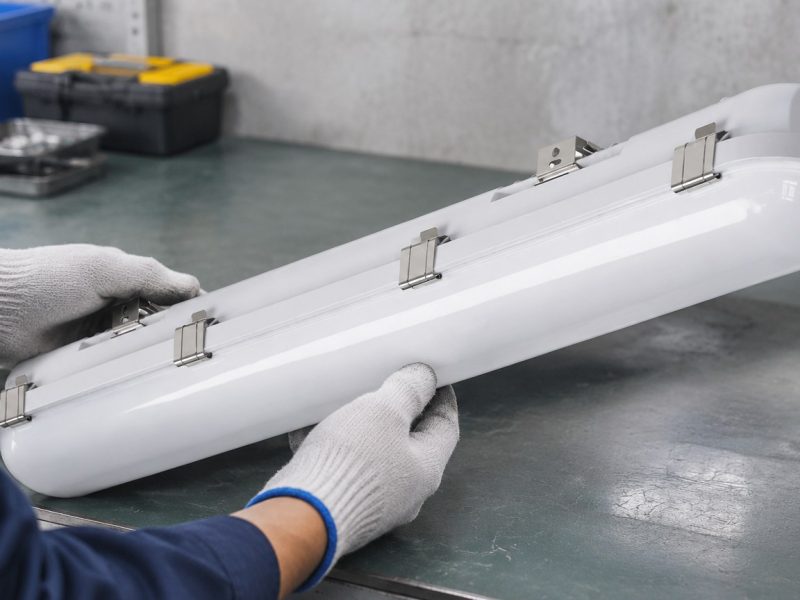
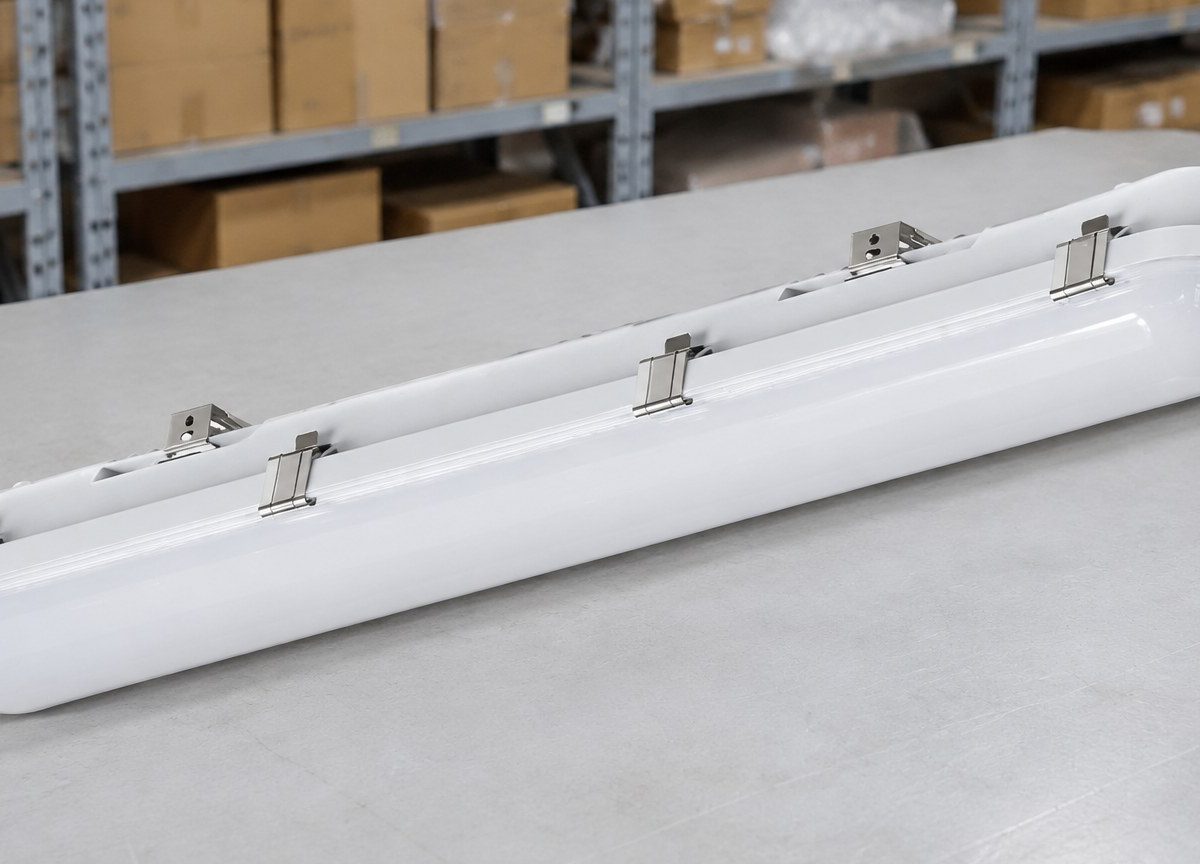
Mounting and cable-entry parts also matter. Compare the exact assembly, not a photo of a similar bracket. If the installer needs accessories for 200 positions, a quotation excluding those parts is incomplete even when the luminaire price looks attractive.
For private-label orders, separate label artwork, packaging changes and any one-time charges from recurring unit cost. A buyer ordering 100 fittings and a buyer ordering 1,000 fittings can spread the same setup charge very differently. With a hypothetical $120 setup fee, that is $1.20 per fitting at 100 units, $0.24 at 500, and $0.12 at 1,000. These are allocation examples, not CoolShinePro fees.
Ask for quantity breaks at 100, 300 and 1,000 units if those quantities match your forecast. Do not assume a fixed percentage discount: different configurations, carton utilization and delivery schedules can change the result. Record the validity date and currency beside each offer.
Keep the requested delivery date on the same sheet. A phased order of 100 units now and 100 later may have two freight bookings and different storage responsibilities from one 200-unit shipment. Compare the total agreed schedule, including who holds stock between releases, rather than assuming the same unit price means the same commercial commitment.
Compare a complete 200-fitting purchase
The following hypothetical quotations illustrate the method. They are not advertised prices, current market averages or offers from CoolShinePro. Both proposals are assumed to meet the same approved specification and delivery scope; freight is compared on the same basis. Tax, duty and installation are excluded here.
| Cost line | Illustrative offer A | Illustrative offer B |
|---|---|---|
| Fitting price | $18.00 | $19.20 |
| Quantity | 200 | 200 |
| Fitting subtotal | $3,600 | $3,840 |
| Required mounting accessories | $240 | Included |
| Agreed freight scope | $480 | $420 |
| Comparable purchase total | $4,320 | $4,260 |
| Total per installed position, before labour | $21.60 | $21.30 |
Offer A is $1.20 cheaper per fitting but $60 more expensive across the defined purchase. The lesson is not that a higher unit price is preferable. It is that the purchasing scope must be equal before the figures mean anything.
For international orders, write the agreed Incoterm, named place and version into the request. Do not compare an EXW quote with a delivered quote by subtracting unit prices. Add the missing transport and handling scope first, and have your logistics partner confirm duty and tax treatment for the destination.
Include freight volume in wholesale decisions
Tri proof LED light wholesale orders are physical shipments, not just spreadsheet quantities. A change in protective packaging can alter chargeable volume even when the fitting is unchanged.
Consider two hypothetical outer cartons, each holding 10 fittings:

| Carton assumption | Carton volume | Cartons for 200 fittings | Total carton volume |
|---|---|---|---|
| 1.25 × 0.30 × 0.25 m | 0.09375 m³ | 20 | 1.875 m³ |
| 1.25 × 0.35 × 0.30 m | 0.13125 m³ | 20 | 2.625 m³ |
The second package uses 40% more carton volume in this example. Actual chargeable freight can also depend on gross weight, carrier rules, pallets and route. These dimensions illustrate a calculation and are not this product’s packing specification.
Request the final packing list before shipment booking. It should state pieces per carton, outer dimensions, net and gross weights, and pallet arrangements where applicable. Reducing protection merely to reduce volume can increase damage and replacement costs.
Check operating cost without replacing lighting design
Running cost matters particularly for long-hour warehouses and production sites. For 200 fittings operating 12 hours per day for 300 days, an illustrative 36W system consumes:
200 × 36 ÷ 1,000 × 3,600 = 25,920 kWh per year.
An otherwise comparable 40W system consumes 28,800 kWh. The difference is 2,880 kWh, or $432 per year at an assumed $0.15/kWh. Use your actual electricity tariff and verified complete-fitting wattage before making a purchase decision.
A 36W option is not automatically an equivalent replacement for a 40W option. Confirm maintained illuminance, distribution, glare and the project layout. A cheaper or lower-wattage fitting that leaves picking positions underlit fails the comparison. For a warehouse brief, see our racking and picking-aisle lighting guide.
Make the sample approval match the production order
For an illustrative 200-fitting project, approve two samples: one standard unit and one control-equipped unit if both are ordered. Record input, selected CCT, visible construction, accessory fit and operation with the intended controller. Two samples verify configurations; they do not provide statistical proof of a complete batch.
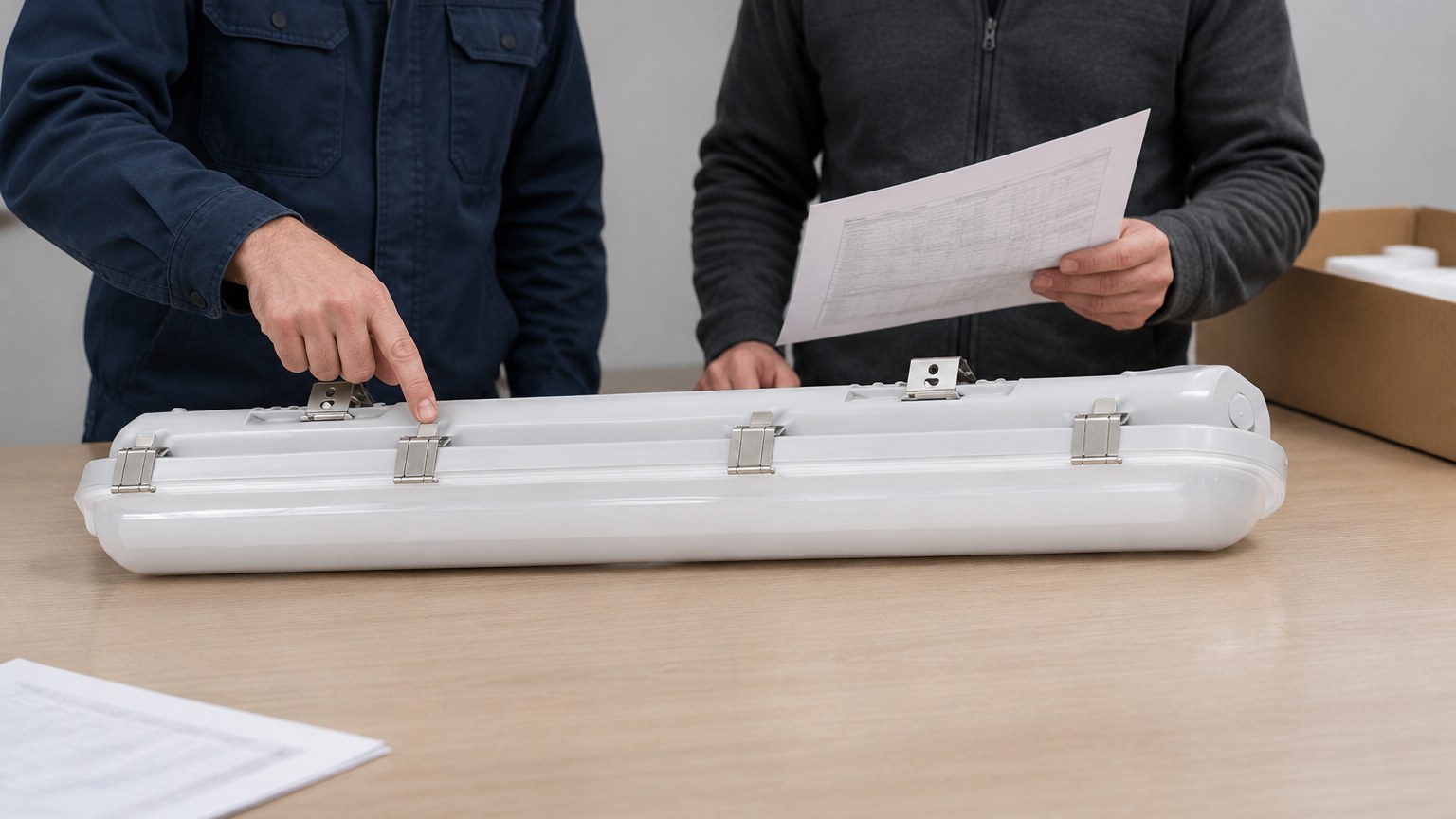
Confirm that the production bill of materials and order codes match the approved samples. Write down how a component change will be communicated, which documents accompany the shipment and how replacements are identified. Specify warranty terms in the contract rather than copying an unverified duration from a comparison sheet.
The tri-proof factory and supplier guide covers the broader supplier review. This price comparison is the next step: turning an acceptable supplier into a purchase order with a defined scope.
Send a quotation request that can be answered accurately
Send CoolShinePro your destination, application, voltage, target specification and quantity split. Include mounting information and the required delivery basis. For repeat distribution orders, add the forecast and private-label requirements.
A useful request reads: “Please quote 200 IP66 linear fittings for a 200–240V warehouse project: 160 standard and 40 confirmed dimming versions, 4000K, with all specified mounting parts. List packing data, delivery scope, sample arrangements and quotation validity separately.”
That gives both sides something measurable to compare. Start with the 4ft bulk-buying specification guide, then request a configuration-specific quotation through our contact page.