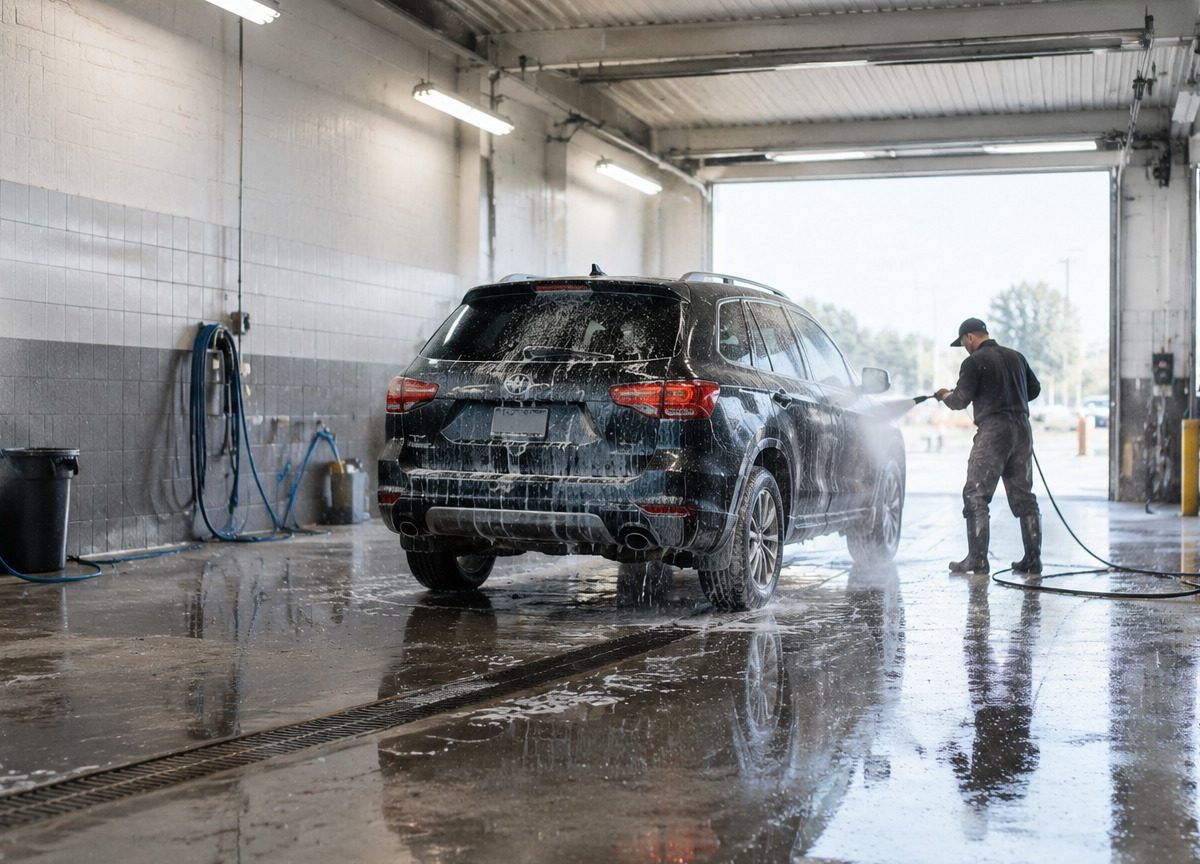
Buying car wash LED lighting means solving more than a water-protection problem. A wash bay must let staff see the vehicle and floor while fittings may encounter spray, cleaning chemicals, condensation and reflected glare. A detailing bay has a different task: revealing marks and surface defects on curved, glossy panels.
For a commercial wash operator, distributor or project contractor, the first purchase document should therefore be a zone schedule. Separate the wet wash area, vehicle handover area, detailing position and dry equipment space. Then compare complete waterproof lighting configurations against the conditions in each zone.
Set the cleaning envelope before selecting an IP code
Record the cleaning equipment’s pressure, water temperature, nozzle arrangement, distance and exposure duration at the proposed fitting position. Also name the cleaning products, concentration, contact time and rinse process. The pressure at the pump alone does not describe what the luminaire actually experiences.
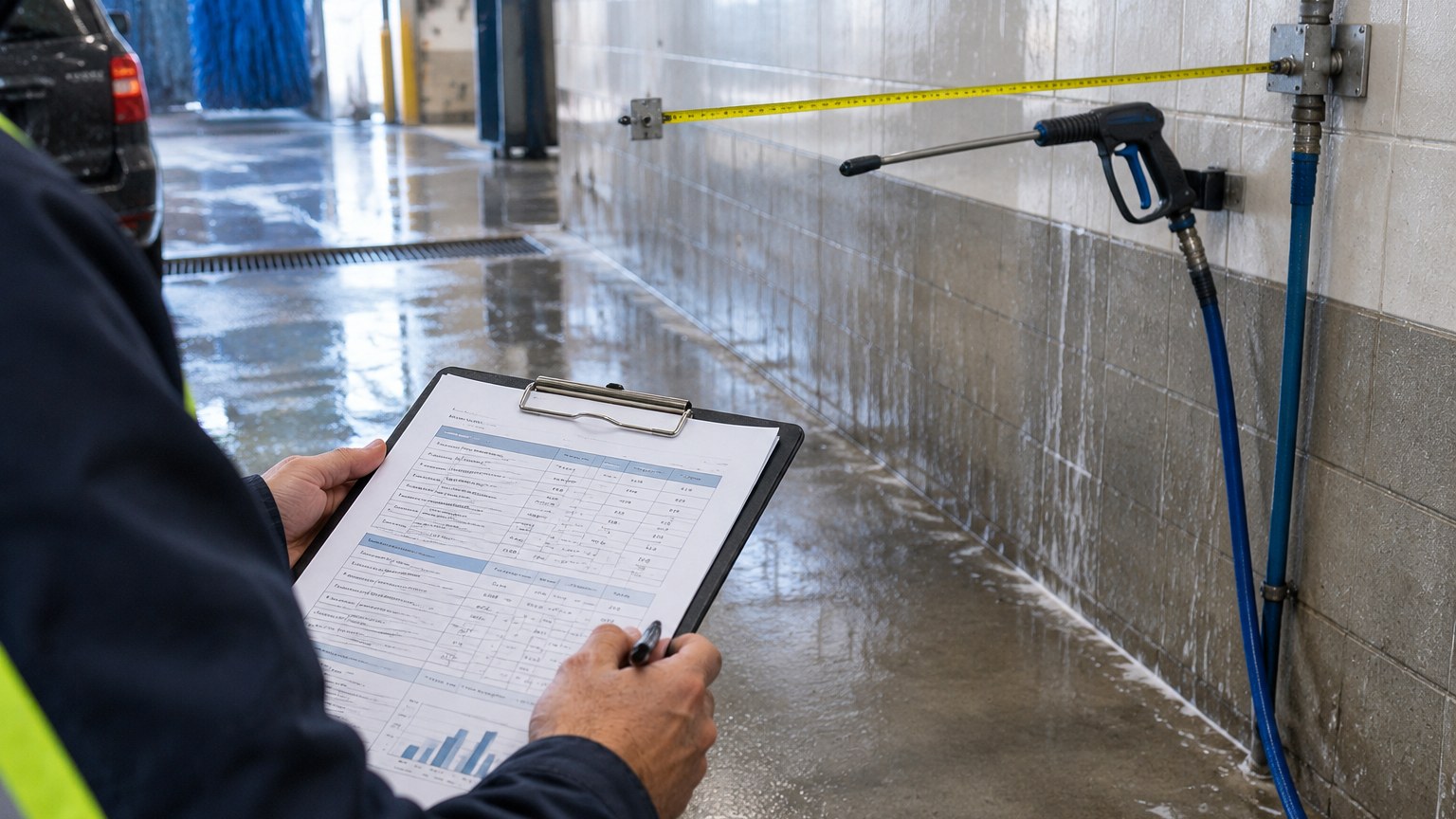
An example site brief could record a 100-bar machine, 60°C cleaning water and a proposed 0.5 m minimum nozzle distance. These are illustrative site inputs, not safe operating limits for an IP66 fitting. The supplier must assess the actual combination and the installation arrangement; a high IP number is not a substitute for chemical and thermal suitability.
NORKA’s car-wash application guidance identifies persistent moisture, cleaning chemicals, high-pressure jets and temperature changes as distinct challenges. Treat those as separate approval questions rather than assuming a sealed-looking linear housing answers all of them.
Compare protection classes without confusing their tests
Intertek’s IEC 60529 overview distinguishes water jets, powerful water jets, immersion and high-pressure/steam-jet exposure. The relevant test description belongs in the technical comparison alongside the actual cleaning brief.
| Marking or condition | What it addresses | What it does not establish on its own |
|---|---|---|
| IP65 | Dust-tight enclosure and water-jet protection | Resistance to every pressure-washer setting or detergent |
| IP66 | Dust-tight enclosure and powerful-water-jet protection | An unrestricted high-pressure, hot-water cleaning envelope |
| IPX7 | Temporary immersion conditions under the applicable test | Automatic compliance with every jet-cleaning condition |
| IPX9 | High-pressure/steam-jet protection under its applicable test | Universal resistance to aggressive chemicals or every installation detail |
| 60°C wash water in the example brief | A recorded process temperature | The permitted ambient or surface temperature of an offered model |
TRILUX’s luminaire selection guidance separately discusses splash, jet and pressure-washer cleaning. The practical procurement lesson is to match the tested configuration and exposure rather than purchasing on an IP66-versus-IP65 price difference alone.
For the underlying enclosure comparison, see our IP65 and IP66 lighting guide. In a car wash, seals, diffuser, clips, cable entry and the installed assembly all need to correspond to the approved configuration.
Give washing and detailing different visual briefs
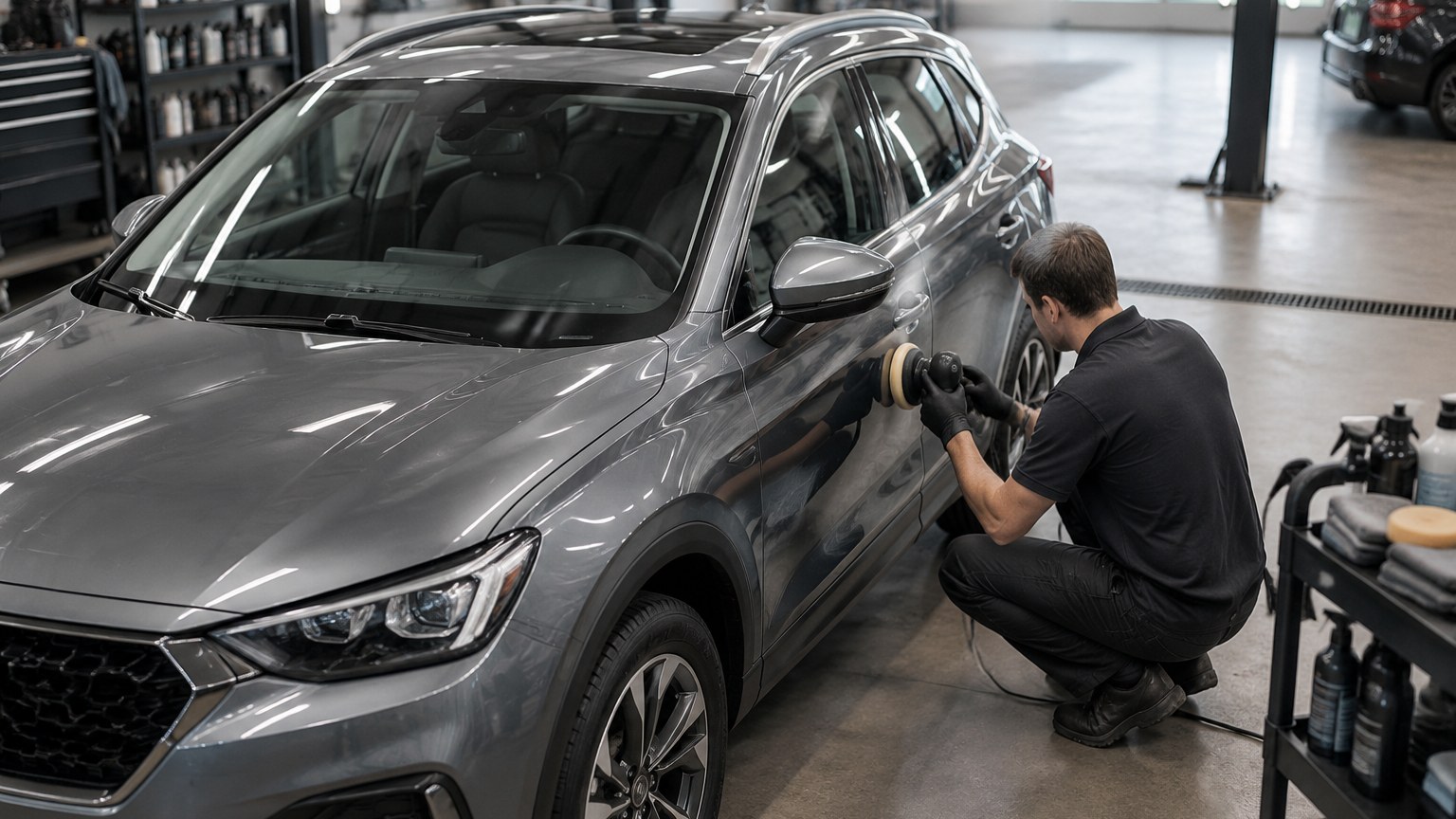
A vehicle body creates shadows on the floor and can block ceiling light from reaching lower side panels. Wet tiles, glass and paintwork also create reflections. A layout that looks bright in an empty bay may be uncomfortable or ineffective when a tall van occupies it.
The table below is an illustrative project-planning schedule, not a universal car-wash lighting standard. It shows how a buyer can give different tasks distinct numerical targets for a designer to assess against the applicable requirements.
| Example zone | Selected planning target | Additional evaluation point |
|---|---|---|
| Vehicle approach or handover position | 150 lux on the identified horizontal plane | Glare and transitions between outdoor and indoor light |
| Main wash task area | 200 lux on the selected work plane | Shadows around the vehicle and visibility of walking surfaces |
| Manual finishing area | 300 lux on the selected work surface | Light reaching the vehicle sides, not only the floor |
| Detailed surface inspection position | 500 lux on the identified inspection plane | Reflection pattern, colour rendering and defect visibility |
Specify the plane, measurement grid and representative vehicle position with each target. Do not copy an inspection value onto the whole site or assume that a ceiling luminaire alone will reveal every paint defect. Colour-sensitive inspection also requires suitable colour quality; a 4000K or 5000K label by itself does not establish colour-rendering performance.
Calculate a bay example without mistaking it for a design
Consider a 6 m × 4 m bay, or 24 m², with a chosen 300-lux comparison target. Use an illustrative luminaire output of 4,320 lumens, utilization factor 0.50 and maintenance factor 0.75. The lumen-method estimate is 300 × 24 ÷ (4,320 × 0.50 × 0.75) = 4.44, rounded up to 5 fittings.
| Same example bay | Preliminary quantity | Interpretation |
|---|---|---|
| 200-lux selected target | 3 | Lower horizontal target with the same assumptions |
| 300-lux selected target | 5 | Starting comparison case |
| 500-lux selected target | 8 | Higher target; not proof of good detailing visibility |
This calculation compares inputs only. It does not approve any particular fixture for chemical exposure, hot spray or electrical installation, and it cannot predict reflections or vertical visibility. The eventual quantity must come from the selected product’s photometry and the actual vehicle/bay model.
Screen real products without promising unverified washdown capability
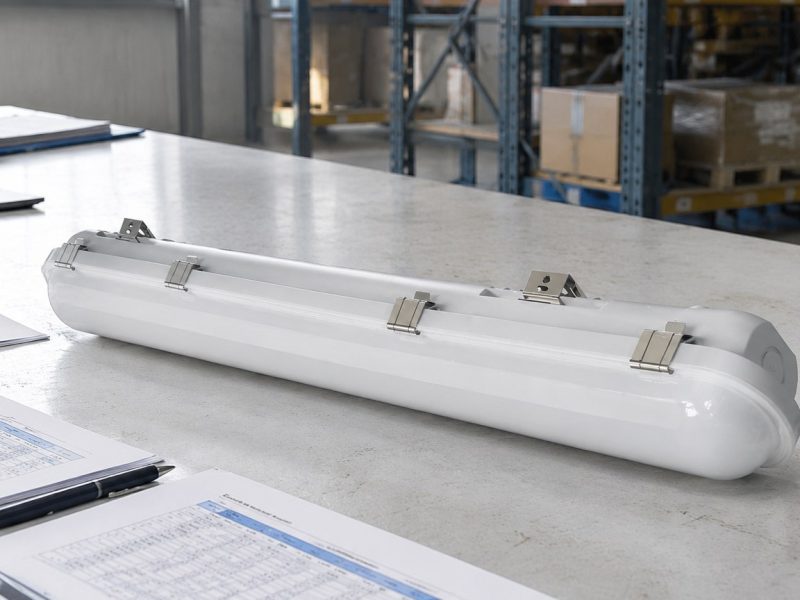
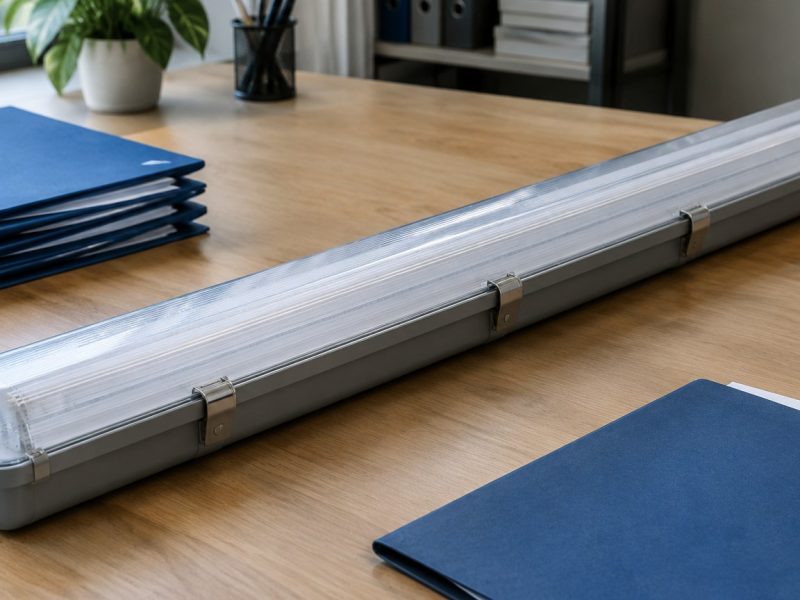
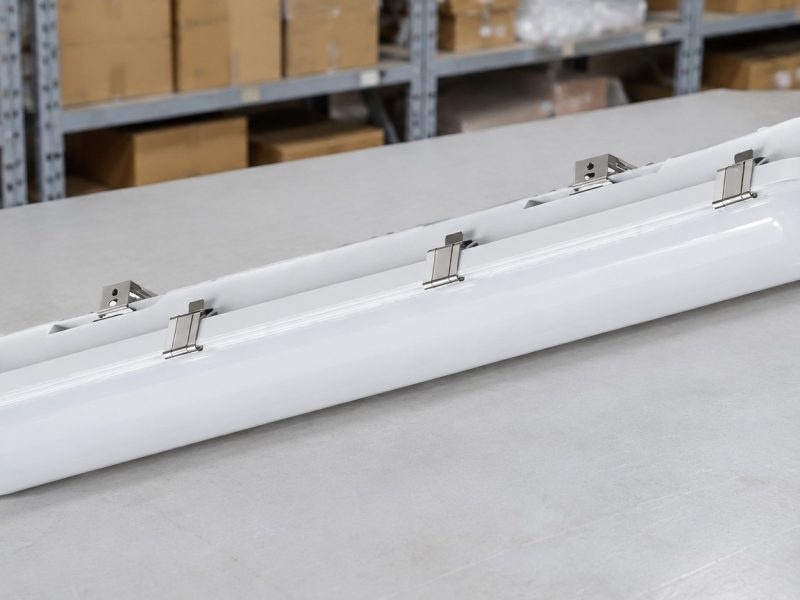
CoolShinePro’s 4ft 36W vapor-tight fixture is an identifiable PC-housing product with an IP66 entry in its current record. It can be a starting point for discussion of appropriately protected or lower-exposure service areas. That record does not establish unrestricted suitability inside every direct-spray wash bay, resistance to the site’s detergents, or an IPX9 cleaning capability.
For a high-pressure wet zone, the enquiry should explicitly require evidence covering its actual cleaning envelope. A supplier should identify a suitable documented configuration or state the mismatch. Do not quietly substitute a generic tri-proof light when the requested duty calls for additional capabilities.
Our 4ft procurement guide explains how to keep dimensions, controls and accessories consistent between sample and bulk order. Use it to prepare the configuration schedule after the environmental screening, rather than to infer wash-bay suitability from nominal length.
Define sample checks and supply scope by zone
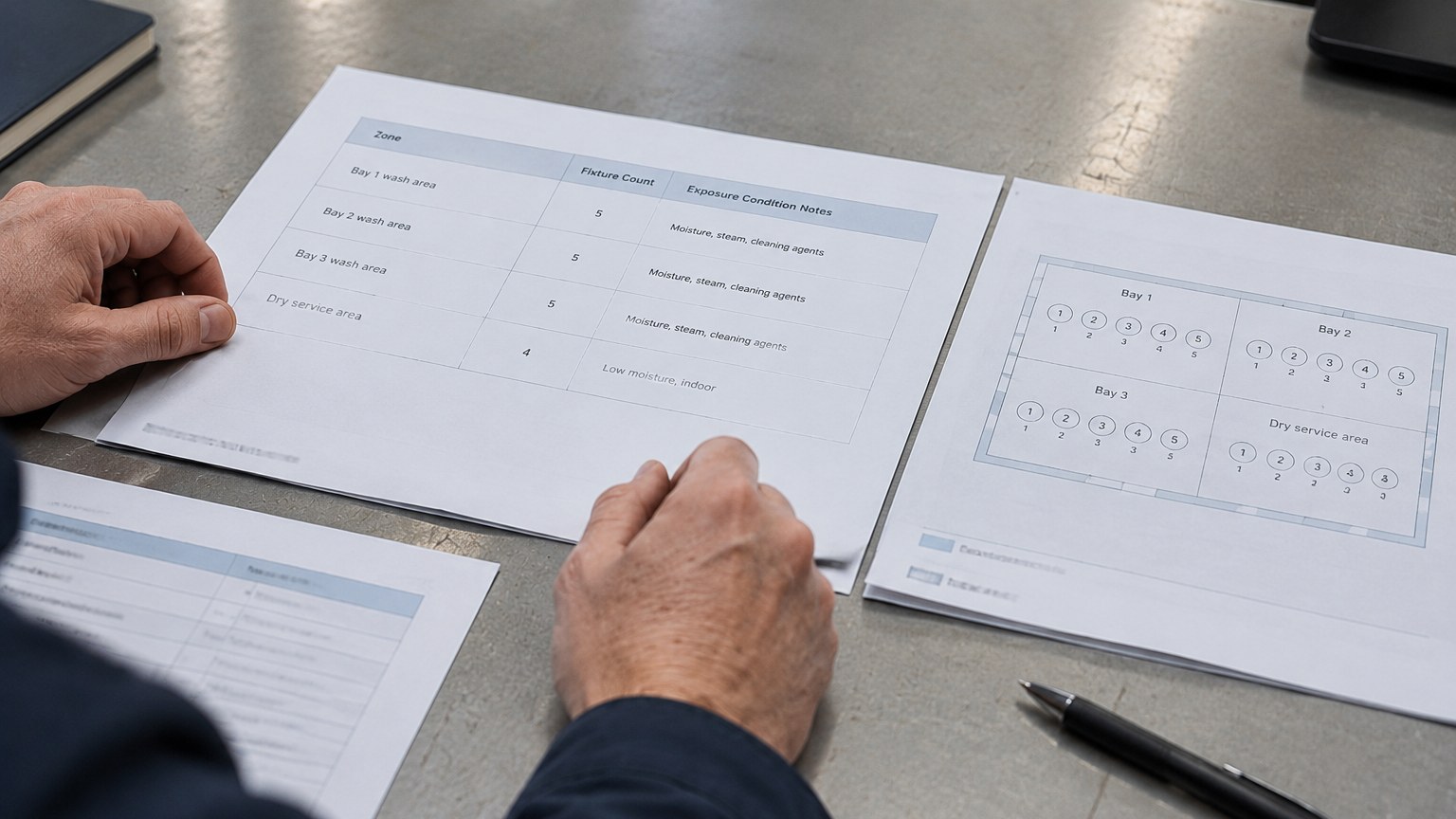
For an illustrative three-bay site with 5 proposed fittings per bay and 4 dry-service-area fittings, the preliminary enquiry contains 19 locations. Split those into their actual exposure groups instead of requesting 19 identical waterproof lamps. Identify the quantities that require a different enclosure, control version or mounting arrangement.
Agree inspection points for seals, clips, diffuser, cable entry and mounting components on the sample. Confirm whether the quotation includes the specified accessories, connection arrangement, packaging and relevant technical documentation. Site trials should assess useful visibility and the documented application conditions through the project’s qualified team; they are not a substitute for applicable product testing.
Frequently asked questions
Are vapor tight lighting and high-pressure washdown the same specification?
No. A sealed linear fixture description does not define its hot-water, pressure-washer or chemical-cleaning envelope. Assess those conditions against the specific configuration.
Is IP66 automatically enough for a car wash?
No. The cleaning method, temperature, chemicals and installed configuration matter. IP66 alone does not authorize arbitrary hot high-pressure washing of the fitting.
Are wash bays and detailing bays the same lighting task?
No. Washing needs safe working visibility around the vehicle. Detailing and surface inspection place additional emphasis on the light reaching the inspected panel and the reflected-light pattern.
Does 5000K guarantee good paint inspection?
No. Correlated colour temperature describes the appearance of white light. Colour rendering, distribution, glare and the inspection procedure must be specified separately.
What information helps a supplier assess the application?
Provide the bay drawing, mounting positions, cleaning equipment and chemicals, operating conditions, visual tasks, supply and quantities by zone. Include the required evidence and acceptance criteria in the enquiry.
Request a zone-based quotation
Contact CoolShinePro with the wash and detailing layout, cleaning brief and quantity schedule. The useful offer is a documented configuration for each exposure group, with limitations stated clearly and the complete supply scope priced consistently. Our supplier sourcing guide provides the wider commercial checklist.