IP65 and IP66 are both dust-tight. Their difference is the water test: level 5 addresses water jets, while level 6 addresses more powerful water jets. Choose between them from the actual exposure and cleaning method, rather than assuming that the larger number also means better corrosion resistance, impact resistance or explosion protection.
It does not mean that IP66 is automatically the better purchase for every installation. The right choice depends on the actual exposure and the documented configuration. Neither rating is a blanket claim about immersion, aggressive cleaning chemicals, impact resistance or explosion protection.
Read the two digits separately
The first digit, 6, describes dust-tight protection. The second digit is the water-protection level. An IP65 enclosure combines dust-tightness with water-jet resistance; IP66 combines dust-tightness with resistance to more powerful jets. The change from 5 to 6 does not change the dust category, and neither code is an immersion rating.
The IP code classifies enclosure protection under IEC 60529. The first digit concerns protection against solid foreign objects and access to hazardous parts; the second concerns protection against water. In the two ratings discussed here, the shared first digit is 6, while the second changes from 5 to 6.
The water-test values explain the difference more clearly than calling both fixtures waterproof. They refer to the IPX5/IPX6 tests, not a universal pressure-washing instruction.
| Comparison dimension | IP65 | IP66 | Interpretation |
|---|---|---|---|
| Dust-protection digit | 6 | 6 | Both are dust-tight |
| Water-protection digit | 5 | 6 | Water jets versus powerful water jets |
| Water-test nozzle diameter | 6.3 mm | 12.5 mm | Different test arrangements |
| Water-test flow rate | 12.5 L/min | 100 L/min | Do not read these as a direct ratio of real-world service life or suitability |
| Jet-test distance reference | 2.5–3 m | 2.5–3 m | Controlled exposure conditions |
| Automatic immersion / chemical / explosion approval | No | No | Assess those requirements separately |
For a manufacturer’s overview of the terminology, see LEDVANCE’s commercial-lighting IP guide. The test classification should be read alongside the selected fixture’s documentation, not treated as a complete site specification.
Describe how water reaches the luminaire
The IPX5 water test provides a concrete reference: a 6.3 mm nozzle delivers 12.5 L/min from 2.5–3 m for at least 3 minutes. Those are controlled test conditions, not a specification for unrestricted pressure washing. For stronger jet exposure, examine the proposed IP66 configuration and the permitted cleaning procedure together; hot water and cleaning chemicals introduce separate questions.
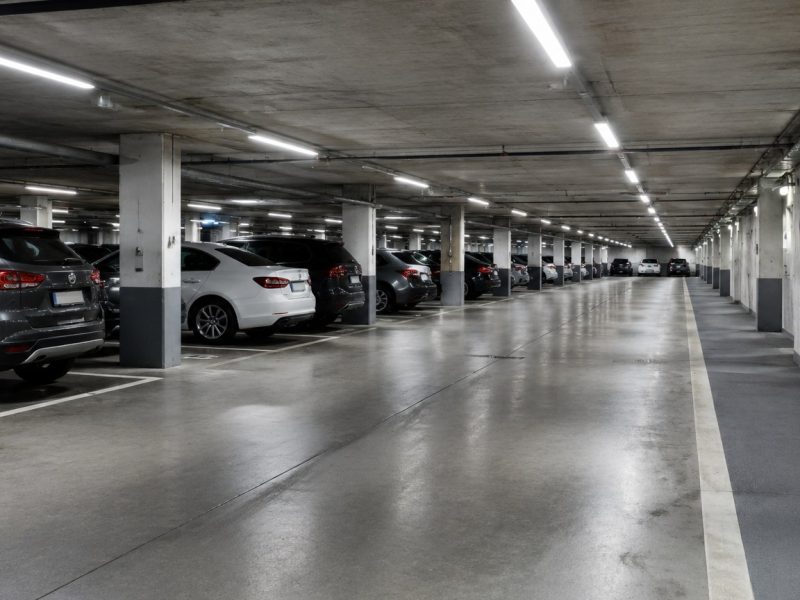
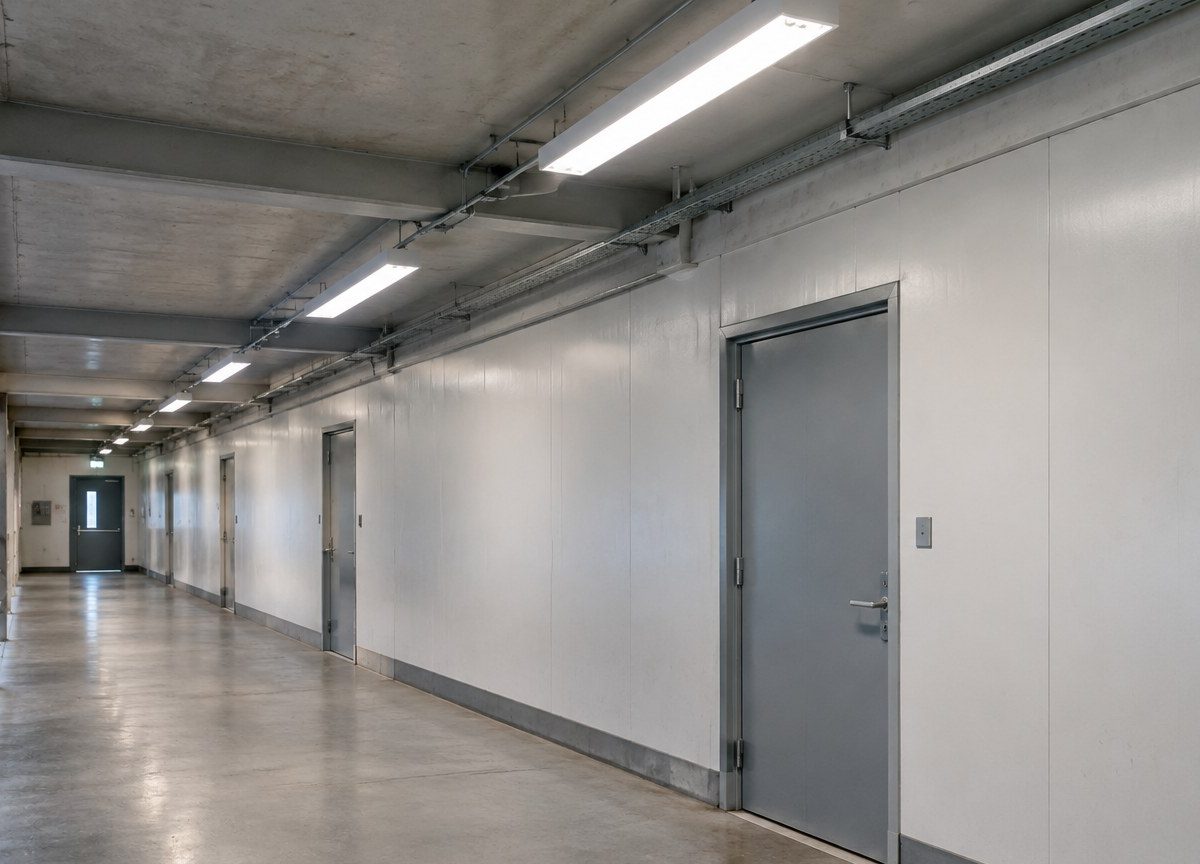
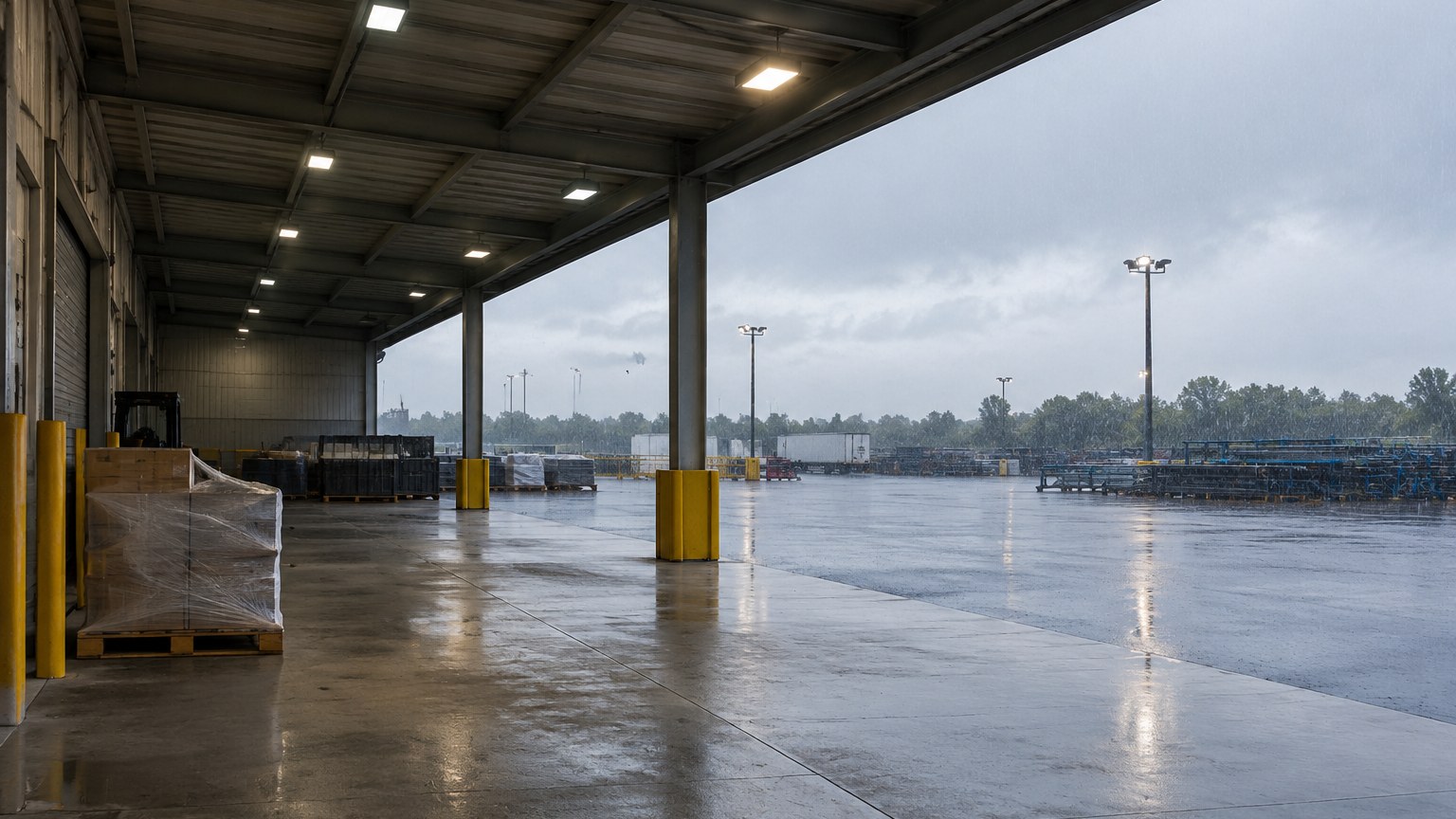
The phrase wet area can hide very different conditions. A sheltered loading area may experience occasional wind-driven rain. A parking structure may have open edges or local cleaning exposure. A production area may be cleaned using a method that directly exposes the fitting and its connections.
Do not translate an informal phrase such as pressure-washer safe into an IP66 requirement without further checking. A specific jet test does not establish compatibility with every cleaning pressure, water temperature, distance or cleaning substance. Get written confirmation for the actual method rather than relying on the rating alone.
Separate ingress protection from the rest of the environment
Impact resistance is independent: for example, IK08 corresponds to a 5 J impact test. IP65/IK08 therefore communicates both ingress and impact classifications, while IP66 on its own says nothing about the IK result. Material compatibility and corrosion performance are separate again. Keeping those requirements in distinct specification fields is more informative than asking for the highest IP number available.
The enclosure’s ability to resist the specified water exposure is not the same as resistance to corrosion or chemicals. Where cleaning agents, salt or other substances are present, request information about housing materials, seals, clips and exposed accessories. Ask which conditions the supplier can support with documentation.
Temperature and condensation also need to be described. The IP label does not establish the luminaire’s operating-temperature range or resolve every condensation mechanism. For cold environments, consult our cold-storage lighting selection guide and confirm the particular product’s temperature and installation conditions.
Similarly, an ingress rating does not describe impact performance. If handling equipment or other site activity could strike the fitting, the designer needs to address that risk separately. Avoid turning a list of different exposures into a single request for a higher IP number.
Ask which parts and configuration were evaluated
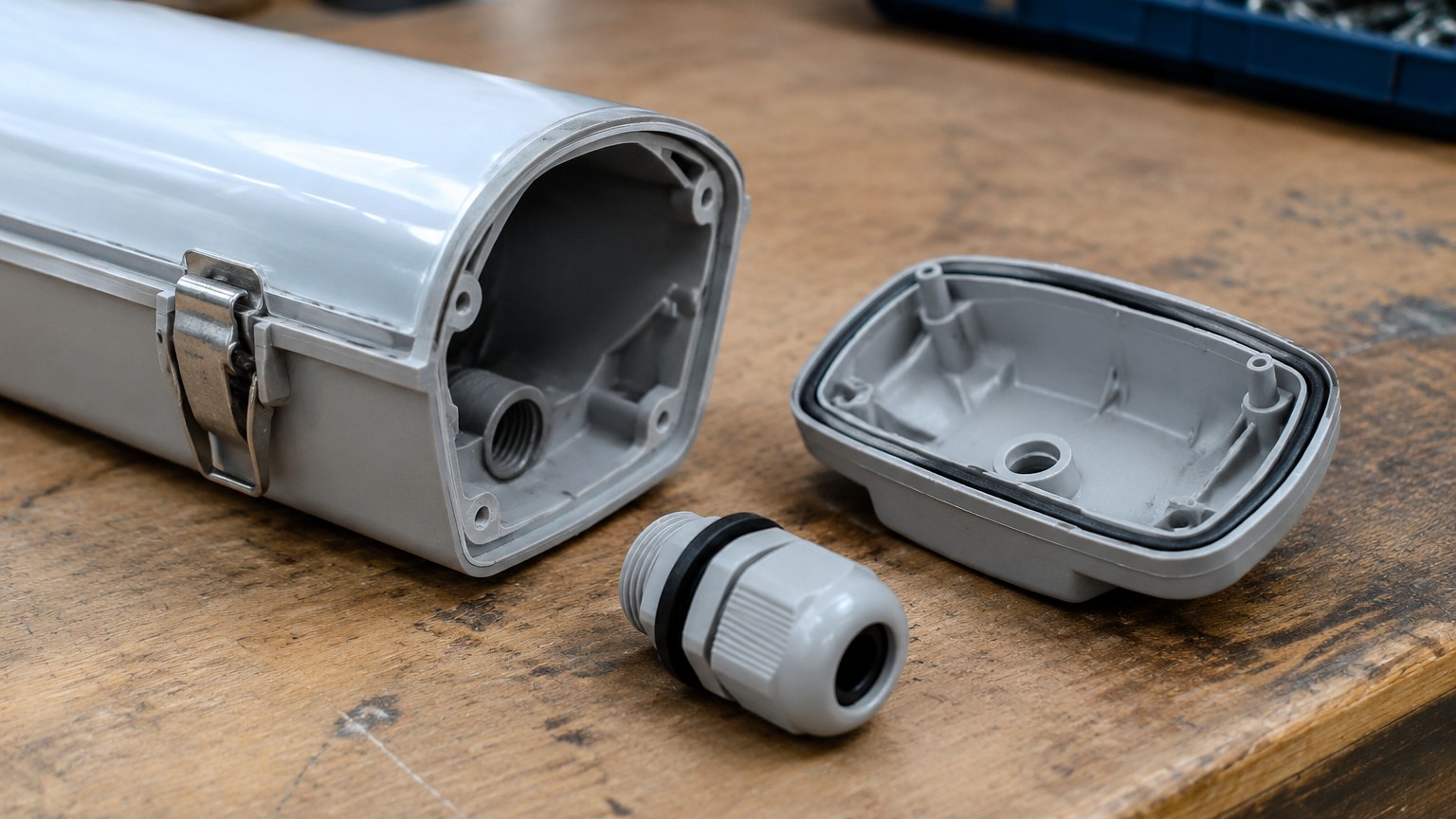
If the product is offered with through-wiring, different sensors or alternative connectors, confirm the configuration being quoted. Do not assume that a document for one variant establishes the rating of every version in the same product family.
Have the installer review the instructions for seals, permitted cable arrangements, mounting orientation and maintenance access. A product with a documented rating still needs to be assembled and maintained as specified. This article is a buying guide, not an alternative to the manufacturer’s installation procedure.
Use a project-specific decision record
Instead of choosing the higher number by default, prepare a short decision record:
- Identify the location and expected dust and water exposure.
- Document any direct cleaning process and other environmental conditions.
- Ask for a model-specific proposal, test evidence and installation limitations.
- Check corrosion, temperature, impact and any specialist requirements separately.
- Record the accepted model, accessories and site conditions in the order.
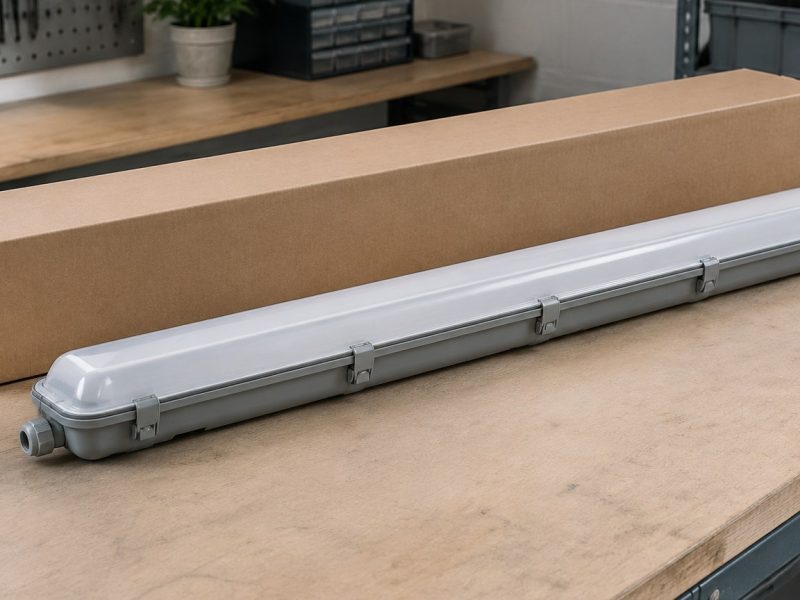
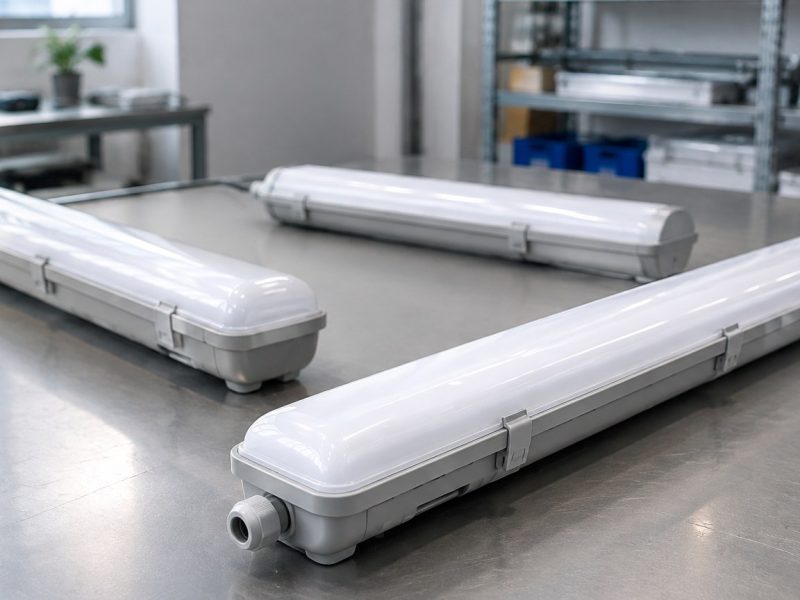
The CoolShinePro six-foot IP65 tri-proof light can be considered where its documented configuration matches the installation. Ask for a different specification if your brief requires protection or performance that the selected model does not establish.
Do not confuse IP66 with explosion-proof lighting
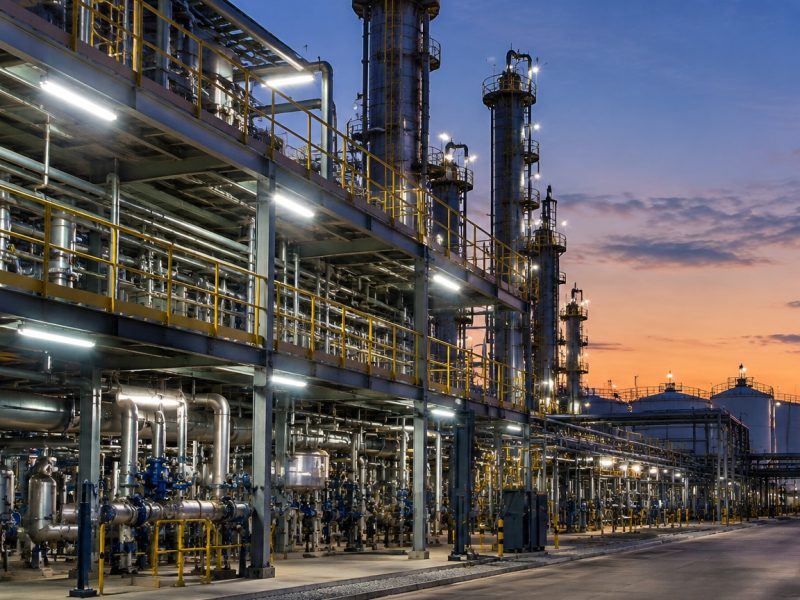
A product can need both ingress protection and a separately established form of hazardous-area protection, but those are different questions. A higher water-protection digit does not prove suitability for flammable gases, vapors or combustible dust.
Before sourcing for a hazardous area, obtain the classification and equipment requirements from the responsible specialist. Our vapor-tight versus explosion-proof comparison explains this boundary. Do not select a general-purpose sealed fixture for that application solely because it carries IP65 or IP66.
Frequently asked questions
Is IP66 more dust-resistant than IP65?
The two codes have the same first digit, so both have the dust-tight classification. The difference discussed here is their water-protection test classification.
Can an IP66 light be submerged?
IP66 alone does not establish immersion suitability. An installation involving submersion needs the relevant documented protection and conditions; do not infer them from a water-jet rating.
Is IP65 enough for a parking garage?
It may be a candidate, but the garage‘s exposure, cleaning, operating conditions and the selected model still need review. The application name alone does not settle the requirement.
Does IP66 mean the light is resistant to cleaning chemicals?
No. Ask separately about the actual chemicals, concentrations and materials involved. Water-ingress classification is not a general chemical-resistance declaration.
What should I include in a request for a higher-protection fixture?
Explain the actual site conditions, cleaning method and any other project requirements. Contact CoolShinePro with that brief and ask for a documented model match rather than only requesting an IP66 label.