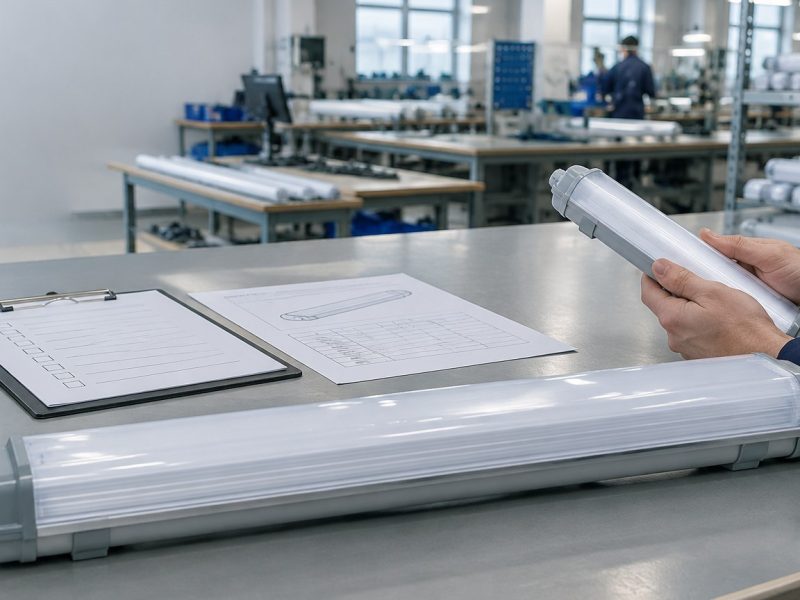
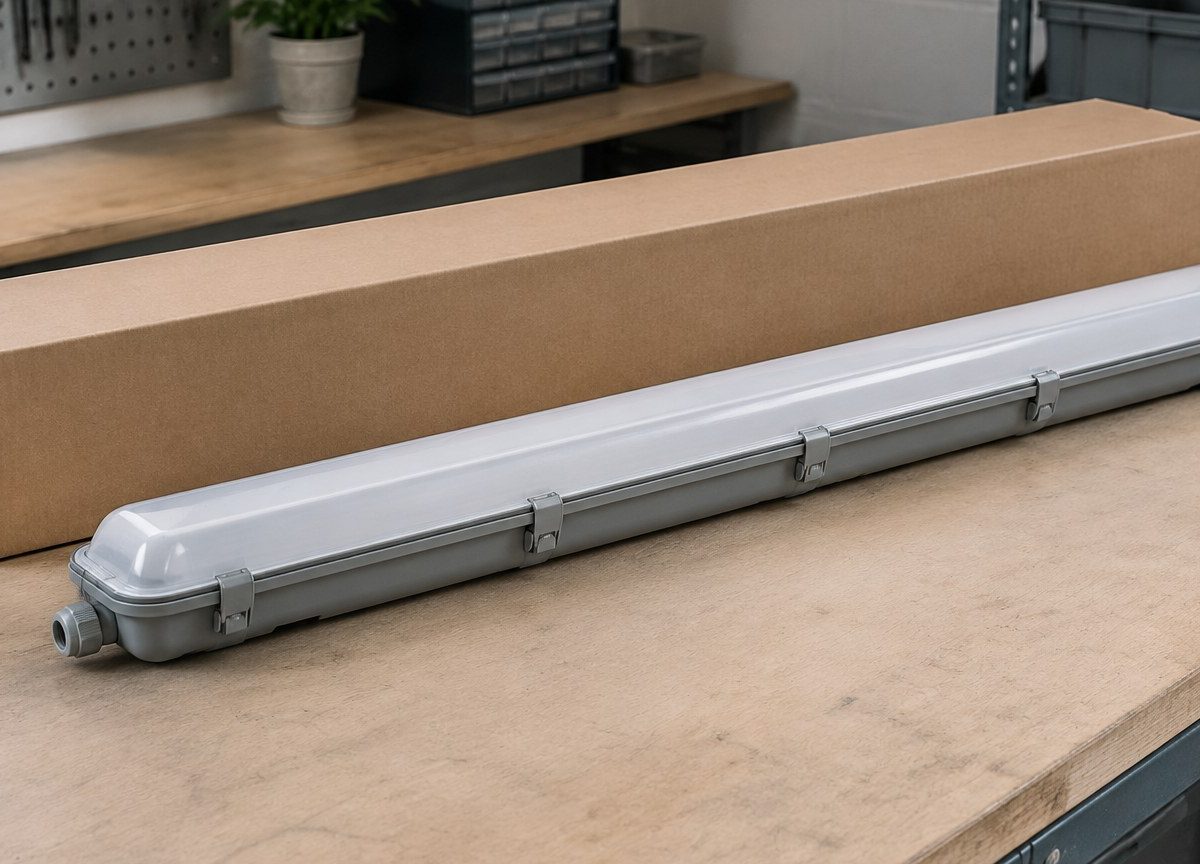
An OEM ATEX explosion-proof lights supplier should be able to turn your purchasing brief into an identifiable, repeatable order. Agree the exact configurations, quantity per version, sample reference and branding responsibilities before treating two supplier quotations as equivalent.
Packaging changes can be commercially straightforward. Changes to the electrical or mechanical design may require a much wider review. For importers and lighting brands, the goal is a repeatable specification that purchasing, engineering and quality teams can all identify.
Separate branding requests from design changes
Start with a written change list. Distinguish packaging requests from changes to the equipment itself. Do not assume an existing assessment covers a new driver, enclosure, cable entry or emergency arrangement.
The following is an illustrative procurement scope, not a minimum-order policy or a statement of certification coverage.
| RFQ example | Quantified scope | What needs agreement |
|---|---|---|
| Packaging project | 1 existing model; 1 carton artwork; no hardware change | Correct product identity, responsible parties and mandatory information |
| Voltage variants | 2 requested electrical configurations | Applicable technical and compliance scope for each version |
| Emergency option | 1 standard plus 1 emergency version | Coverage of the actual emergency design and its operating conditions |
| Evaluation order | 2 samples before production | Sample purpose, cost and acceptance criteria |
| Split delivery | 100 units split into 40 and 60 | Packing identification, release dates and freight scope |
These counts define the work to be quoted. They do not determine whether a proposed design change is acceptable or requires additional assessment.
Choose between an existing configuration and a variant
An existing configuration can reduce purchasing uncertainty when it meets the project and its documentation is complete. A modified design may serve a specific need, but its engineering and assessment implications belong in the commercial discussion before ordering.
| Purchasing route | Example scope | Commercial decision |
|---|---|---|
| Existing configuration | 1 model with its existing driver and mounting arrangement | Agree branding scope, supplied identity and repeat-order terms |
| Requested variant | 1 proposed driver substitution | Review electrical, thermal and conformity implications |
| Multiple finished variants | 2 wattages × 2 mounting arrangements = 4 requested combinations | Establish which combinations are actually available and covered |
Avoid treating every requested combination as an available product. A configuration matrix prevents the approved sample from representing one version while the order contains another.
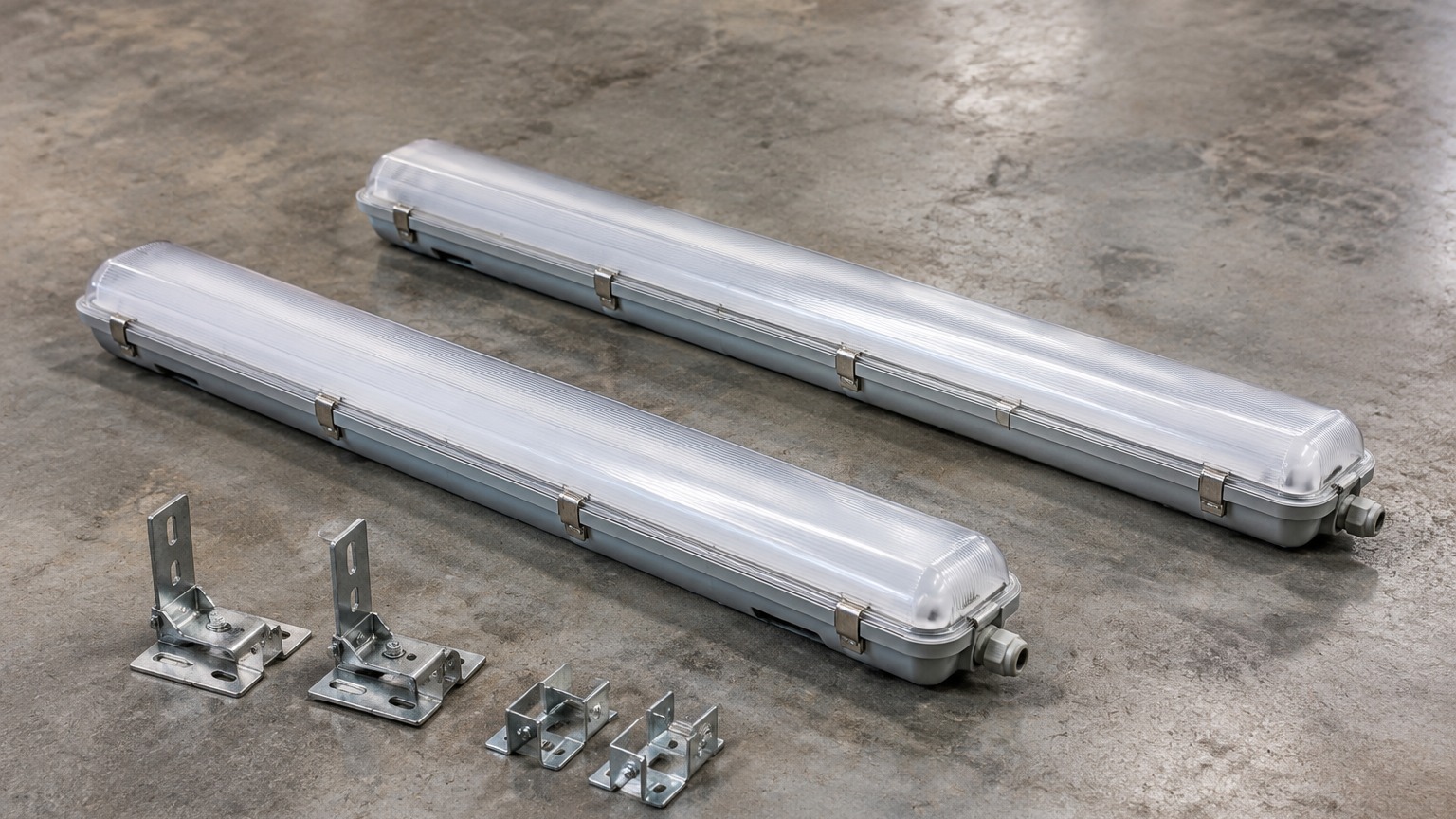
Make the approved sample a purchasing reference
Use samples to confirm identity as well as appearance. Record the model reference, label details, dimensions, accessories and requested functions. Keep label and packaging photographs with the signed specification.
Receiving inspection can confirm conformity with the purchase order. It does not replace applicable hazardous-area assessment or prove every protection characteristic through a simple bench test.
For example, a buyer may request 2 evaluation samples before ordering 100 production units. State whether samples are additional to the 100 units, whether one is retained as a reference, and how the production specification is frozen. These quantity decisions avoid later disagreements.
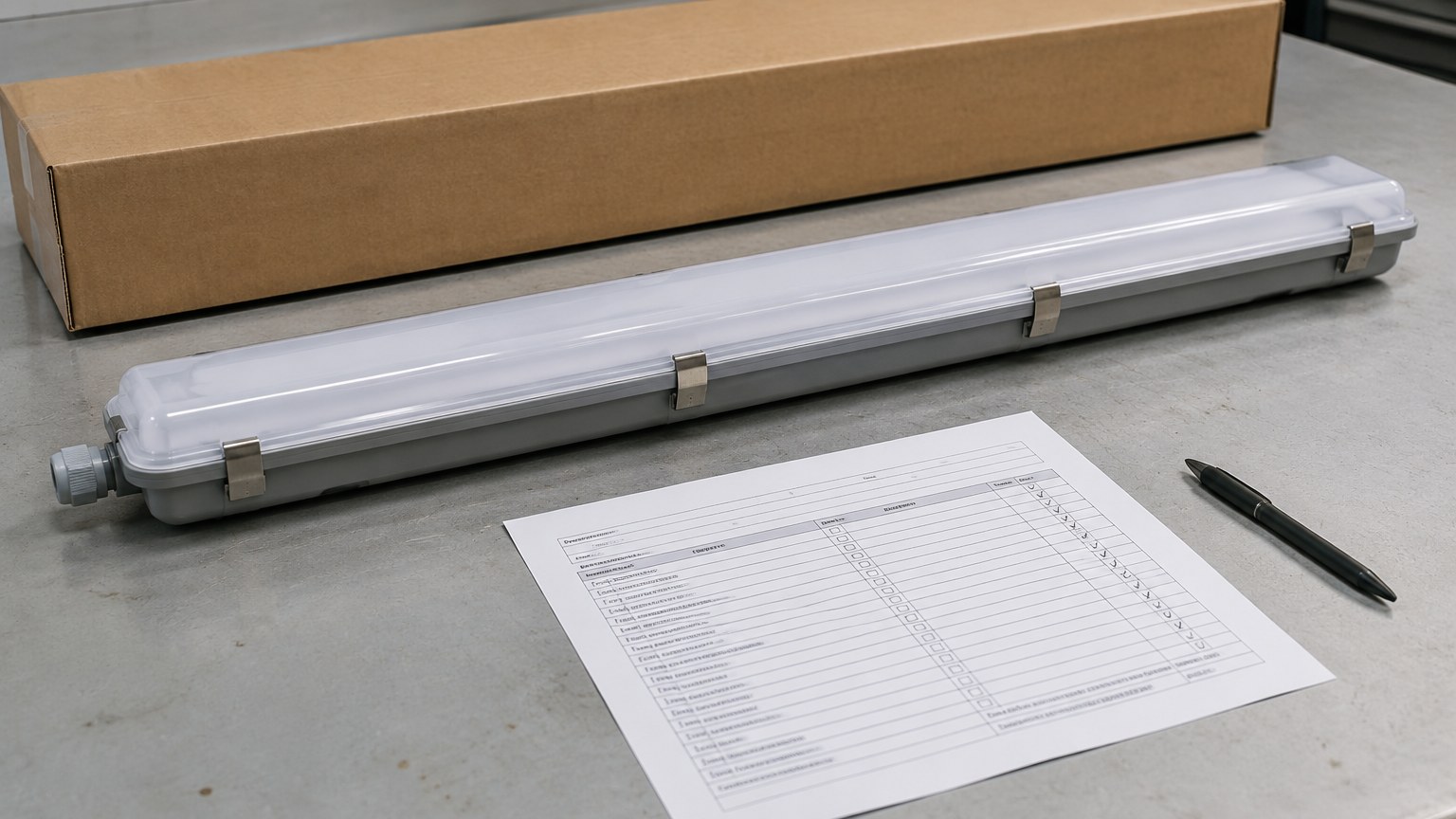
Control split shipments and repeat orders
Suppose 100 fixtures are shipped in batches of 40 and 60. Both batches should refer to the same approved configuration unless a documented change is accepted. Packing lists and identification should distinguish shipments without losing their connection to the approved order.
For repeat purchases, agree how component or document revisions will be communicated. A driver substitution may change temperature behavior, light output, electrical characteristics or assessment scope. An unchanged marketing name does not establish that the equipment is unchanged.
Compare MOQ and timing on the same basis
Ask for separate quotation lines covering samples, artwork, tooling where applicable, production, accessories, packaging and freight. Define the minimum quantity per configuration.
Consider a hypothetical order split across two configurations. This illustrates MOQ arithmetic, not a CoolShinePro MOQ policy.
| Quantity decision | Configuration A | Configuration B | Order total |
|---|---|---|---|
| Original purchasing request | 180 units | 220 units | 400 units |
| Assumed MOQ per configuration | 200 units | 200 units | At least 400 units if ordered at each minimum |
| Revised order retaining B at 220 units | 200 units | 220 units | 420 units |
| Additional quantity versus original request | 20 units | 0 units | 20 units |
An MOQ of 200 per configuration is not satisfied by a combined 400-unit order when one version contains only 180 units. Ask whether the smaller run is negotiable, can be combined with another production batch, or requires a separate setup cost. Compare the cost of the extra 20 units with the alternative commercial arrangement.
Also distinguish sample preparation, buyer approval, any required engineering or assessment work, production and transport. A single lead-time number is not useful unless its start point and included stages are clear.
Frequently asked questions
Can an OEM supplier put our brand on an existing ATEX lighting model?
Branding needs an agreed product-identity and compliance arrangement. A carton logo does not establish that a new legal product identity or a changed luminaire is automatically covered by the existing documents. Define the label, responsible parties and supplied configuration before approving artwork.
Does a driver change count as ordinary customization?
It is a design change that may affect output, electrical characteristics, thermal behavior and assessment scope. Quote the original and proposed configurations separately until the technical and documentation consequences are established.
How many samples should we order before a bulk order?
There is no universal quantity. In the two-sample example in this guide, the buyer can retain one as the approved reference and use the other for agreed evaluation. The sample plan should specify the checks, acceptance criteria and whether samples are additional to the production quantity.
Discuss your OEM lighting project
Prepare a brief covering the intended market, required equipment markings, quantities per variant, existing or modified configuration, branding, packaging and destination. Identify fixed requirements and negotiable preferences.
Explore CoolShinePro explosion-proof lights and send your OEM inquiry. For technical preparation, read our explosion-proof lighting selection guide.
The European Commission’s ATEX information provides the underlying equipment conformity framework.