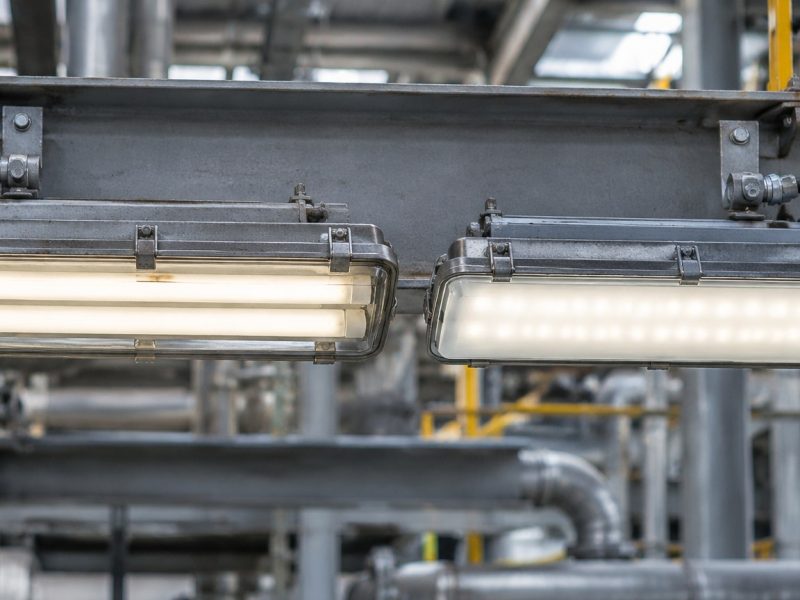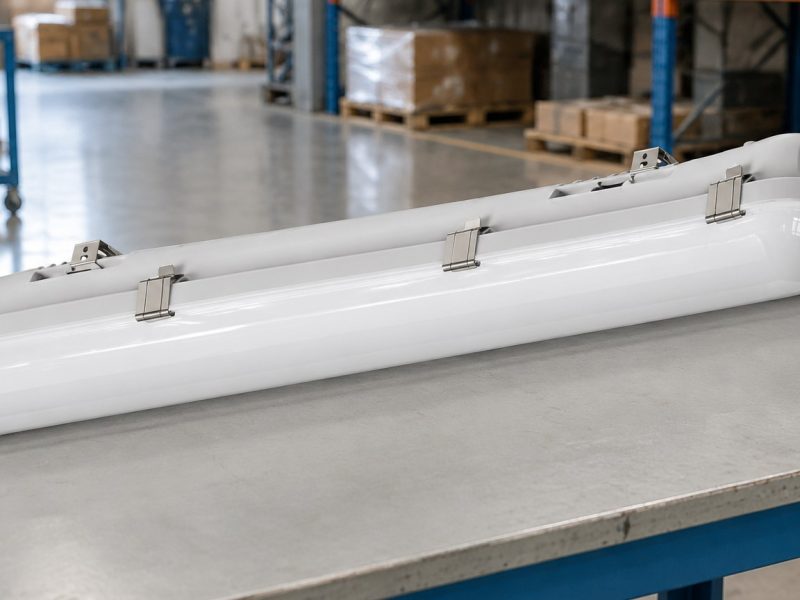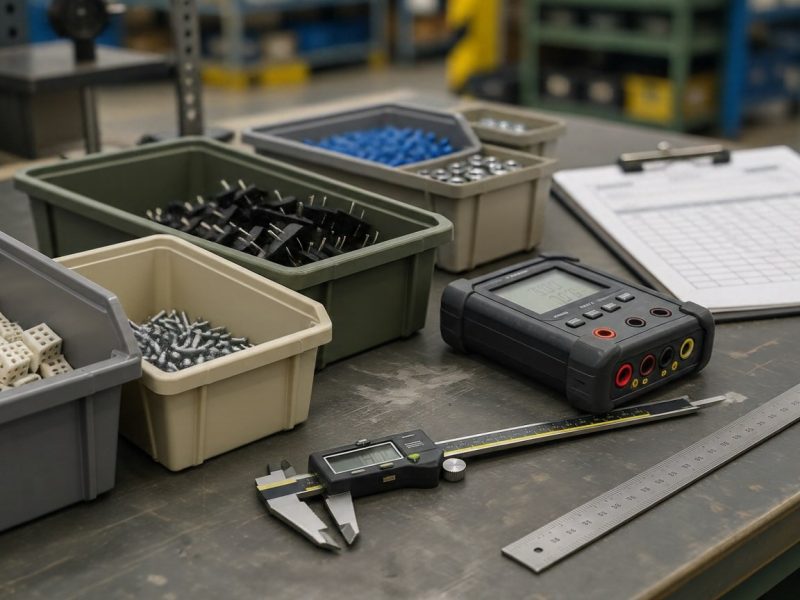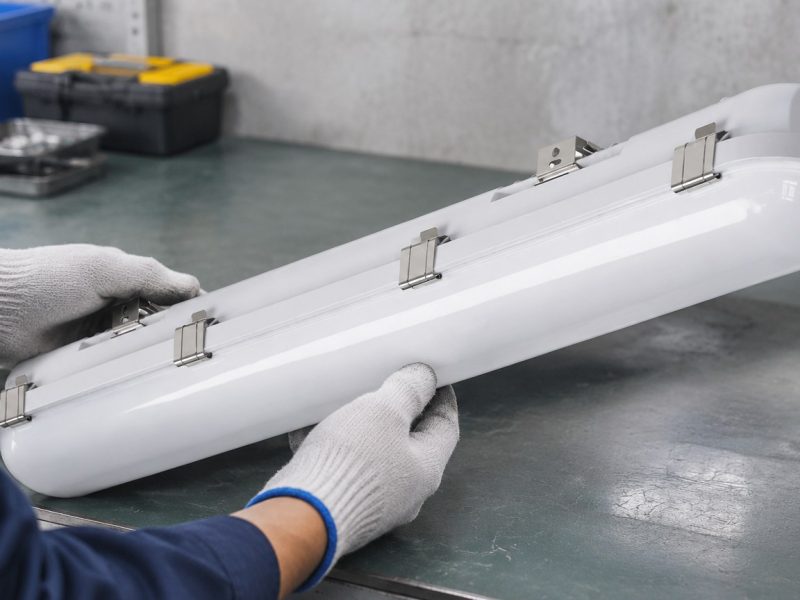
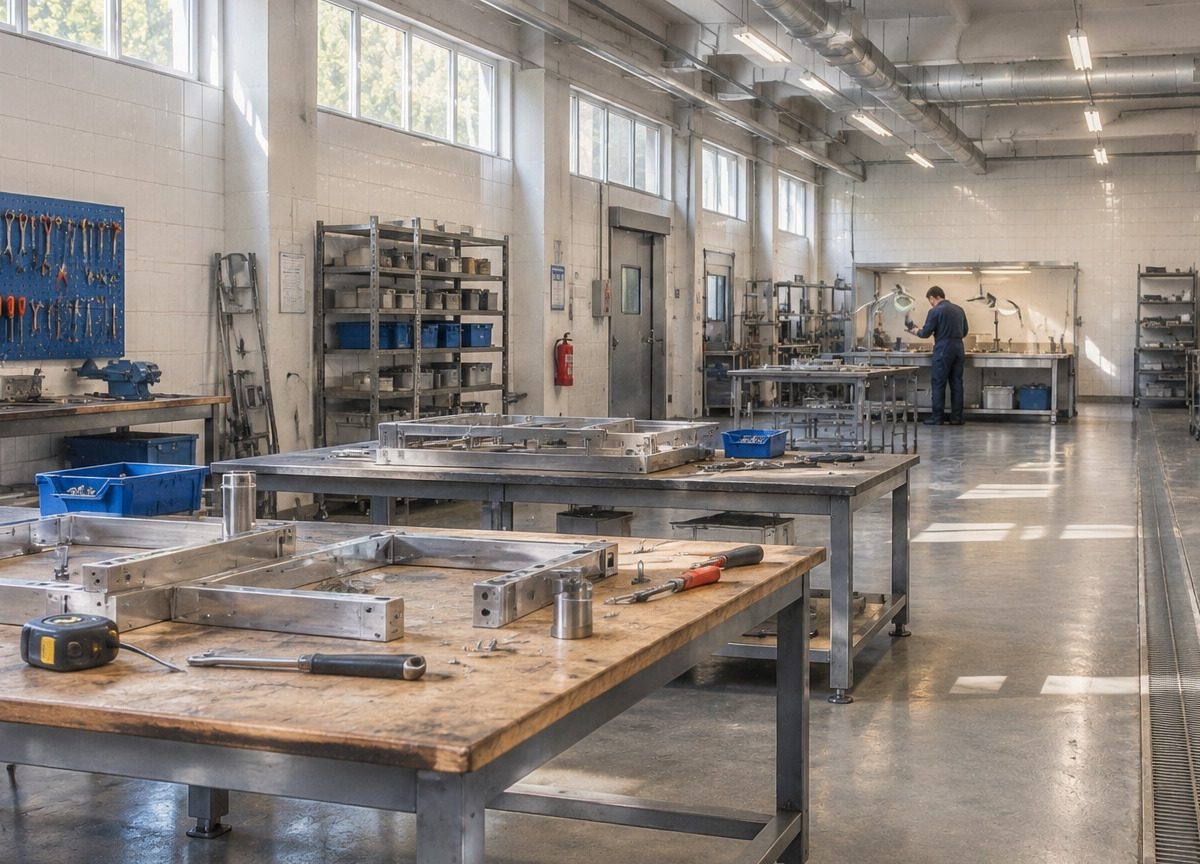
A dusty workshop can have a brightly lit aisle and a poorly lit cutting bench just a few metres away. Ask for a lighting proposal by task and position. For confirmed non-classified locations, compare sealed LED tri-proof fixtures against actual dust exposure, useful light at the work surface and the cost of keeping the optics clean.
Survey the dust source and the work surface
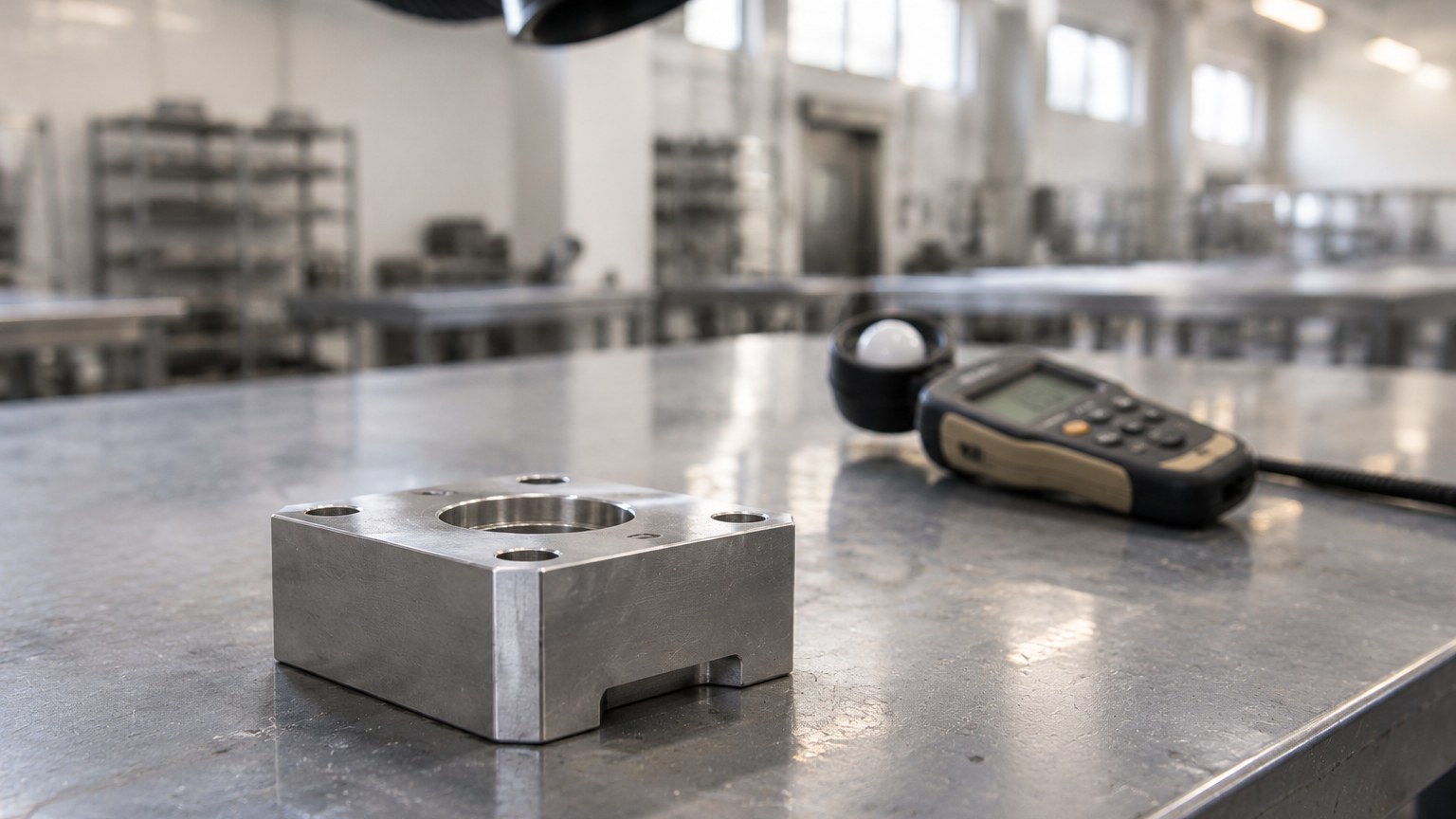
Map fixed workbenches, extraction points, overhead ducts and the route used to clean each fitting. Measure task surfaces at their working height. A reading taken in an empty aisle tells you little about a bench partly shadowed by extraction ductwork. Record operating positions of equipment that can block the light.
Combustible dust needs a separate assessment. Fine wood dust can collect well beyond the machine that produces it, as OSHA’s woodworking guidance explains. Have the responsible project team establish which locations require hazardous-area equipment before specifying luminaires. An enclosure ingress rating alone does not establish ignition protection. See vapor-tight versus explosion-proof lighting for the procurement distinction.
Give each zone a numerical brief
| Illustrative survey zone | Mounting height above floor | Example observed light | What to include in the quote |
|---|---|---|---|
| Movement aisle | 4.2 m | 220 lx average on floor, 110 lx minimum | Floor grid, beam distribution and duct clearance |
| Assembly bench | 3.0 m | 360 lx average at 0.9 m bench height | Bench-plane calculation and shadows with equipment in place |
| Visual inspection station | 2.7 m | 520 lx average, 210 lx minimum on the inspection surface | Local task light option and glare checks at operator eye position |
These are example observations, not required lighting levels. Set acceptance targets for the task and destination project. The inspection station above has a minimum-to-average ratio of 0.40, despite averaging 520 lx. A photometric layout should address the darker points as well as total light output.
Compare maintenance access and dust accumulation
Set a baseline after installation and cleaning. If the same inspection point measures 500 lx after cleaning and 390 lx four weeks later under comparable operating conditions, the observed drop is 22%. Check for dirt, changed equipment positions and operating conditions before deciding whether to move a fitting or shorten a cleaning interval. Include labour and access equipment in that decision.
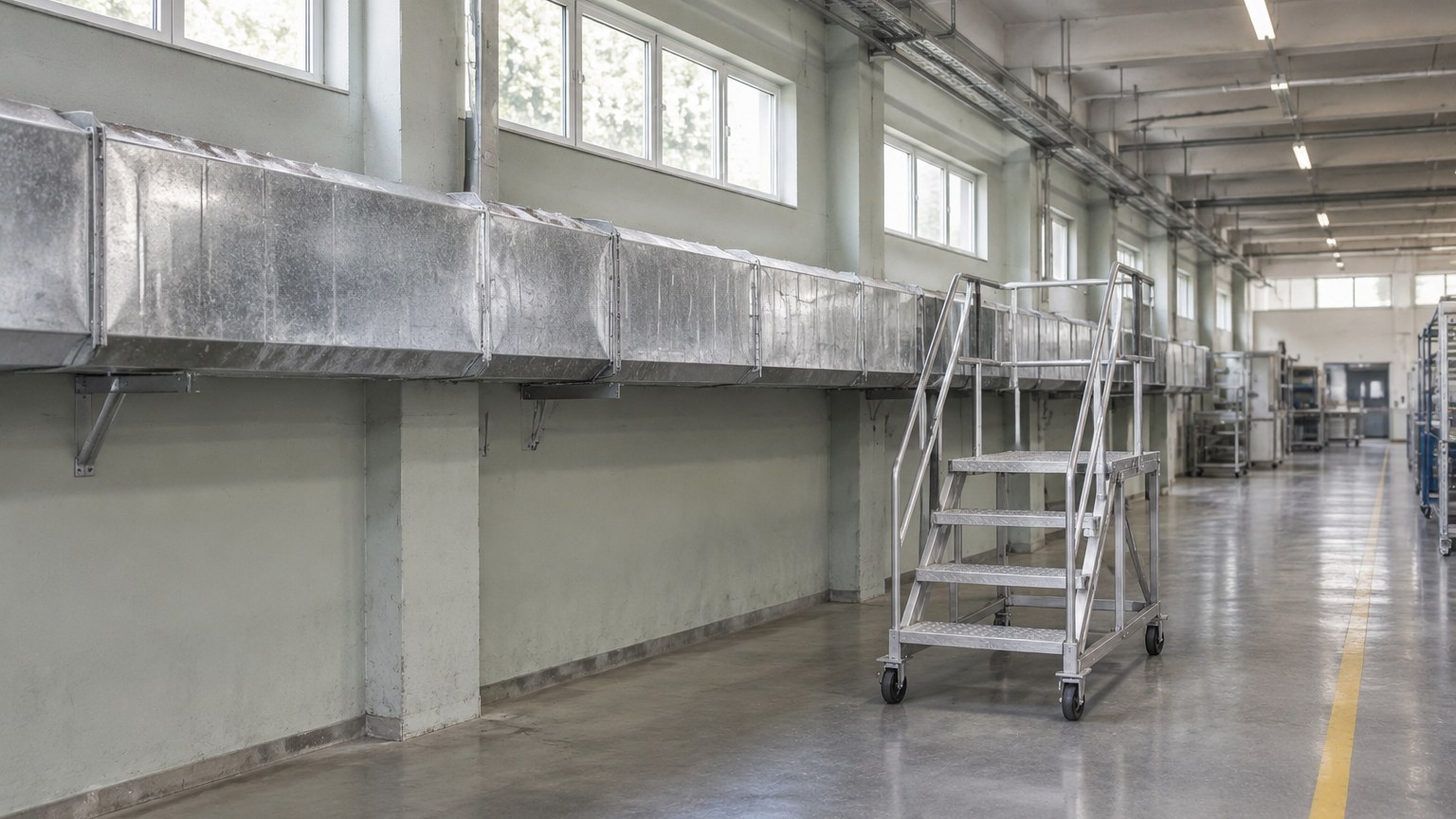
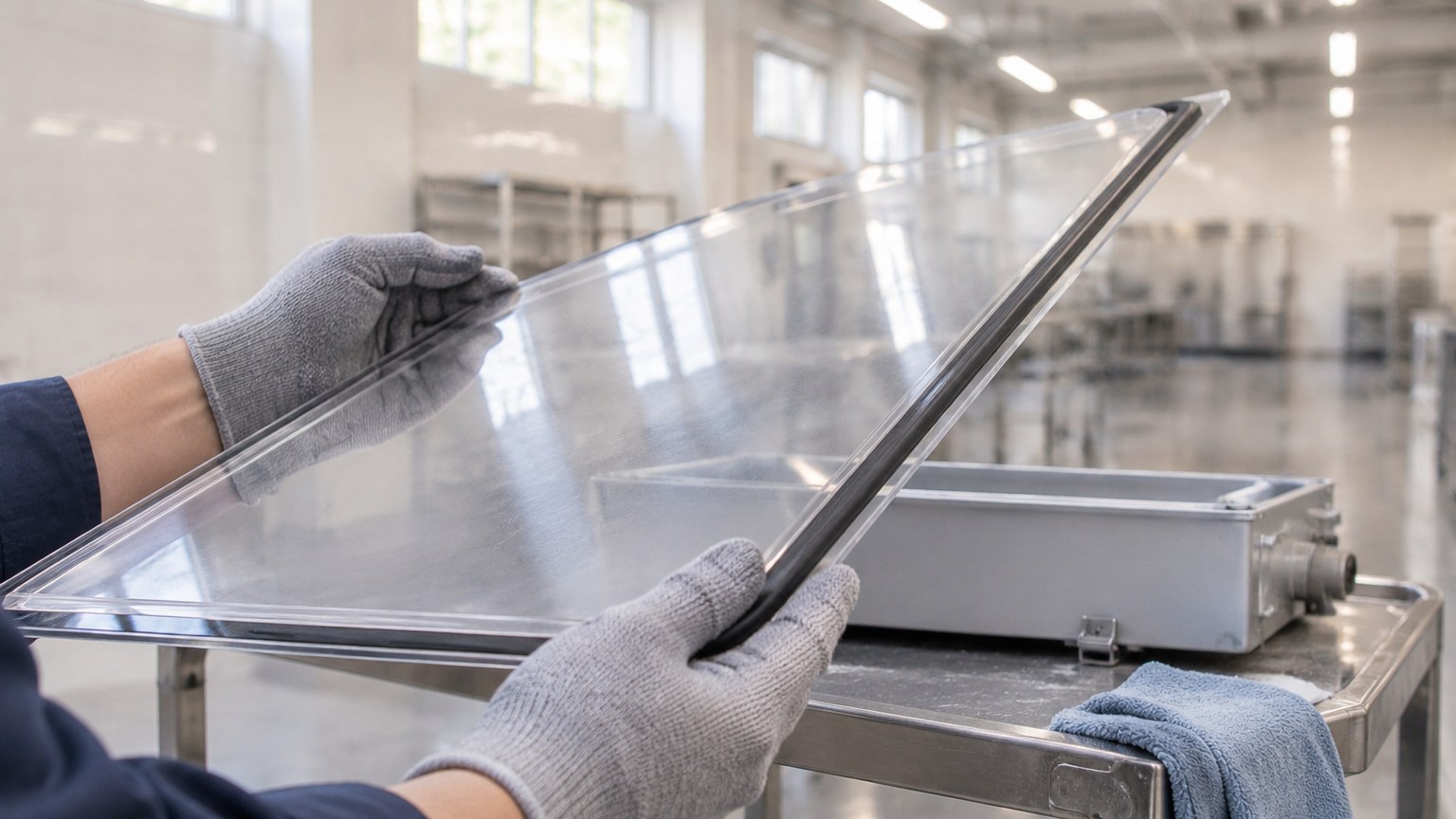
A smooth accessible lens, compatible housing and reachable mounting position can matter more to maintenance than a higher nominal lumen figure. Ask whether the diffuser and gasket are serviceable on the specified assembly and whether the intended cleaning method is supported. Request an alternate position if lifting equipment cannot reach it without stopping a production line.
Send a quote schedule that can be checked on site
Give each zone its own line with quantity, installation height, working plane, project light targets and cleaning method. Request the exact model, photometric file and mounting drawing. For a 48-position example, quote 28 aisle fittings, 16 bench positions and 4 inspection positions separately so the project team can compare optics and maintenance access before approving the bulk order. Use the tri-proof materials guide to specify the housing, gasket and hardware for the cleaning conditions.