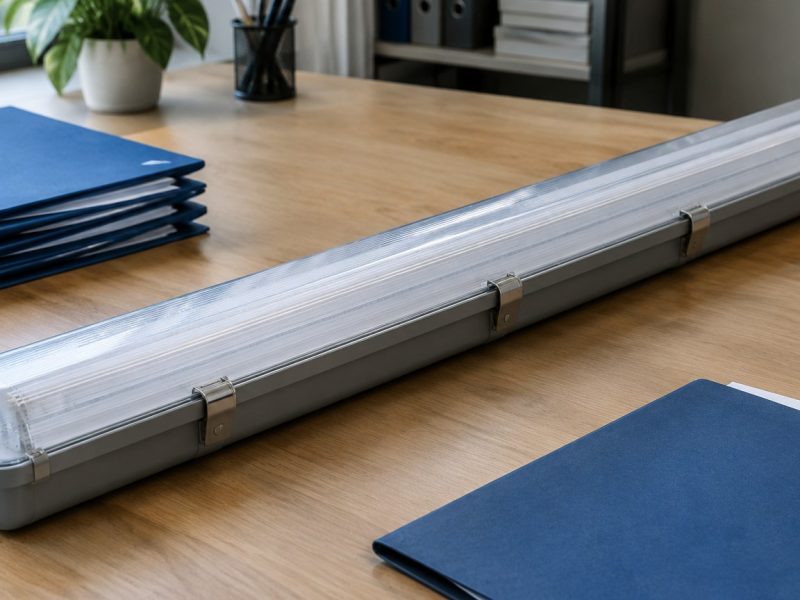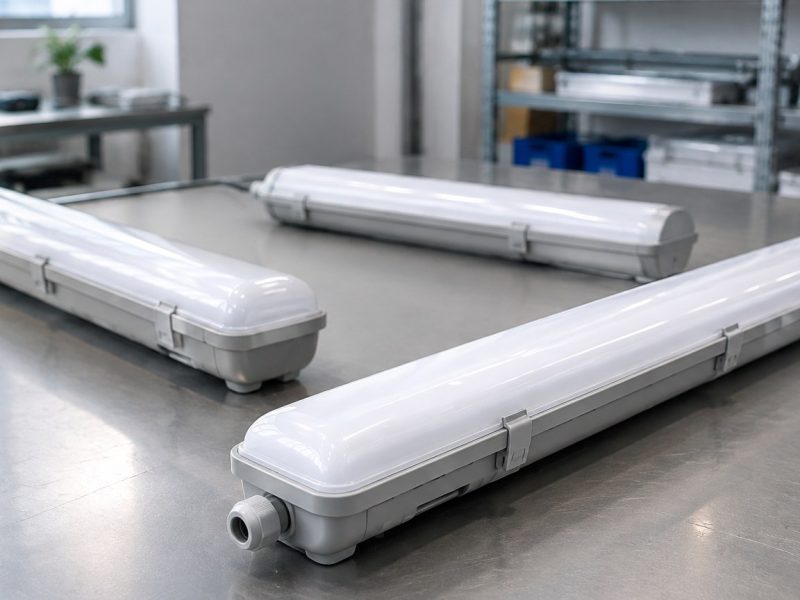
Choosing between a 2ft LED vapor tight fixture and an 8ft model starts with the installation space, not a rule that longer fittings are better. Length affects handling, mounting positions, light distribution and replacement access. It does not, by itself, establish light output or energy efficiency.
For a contractor or distributor buying several sizes, the useful decision is which assembly fits each zone and can be supported throughout the project. This guide compares nominal lengths, physical clearance, equivalent-output proposals and the information needed for a bulk quotation.
Separate the size name from the actual body dimensions
The international foot is exactly 0.3048 m, as described in NIST’s metric guidance. That makes the numerical conversions below exact. The rounded metric labels used in catalogues are a different matter.
| Nominal size name | Exact conversion of the name | Rounded metric label often encountered | Dimension needed for ordering |
|---|---|---|---|
| 2ft | 609.6 mm | 600 mm class | Actual body and complete installed envelope |
| 4ft | 1,219.2 mm | 1,200 mm class | Actual body, brackets and cable-entry clearance |
| 5ft | 1,524 mm | 1,500 mm class | Drawing for the selected configuration |
| 8ft | 2,438.4 mm | 2,400 mm class | Handling, support and service envelope |
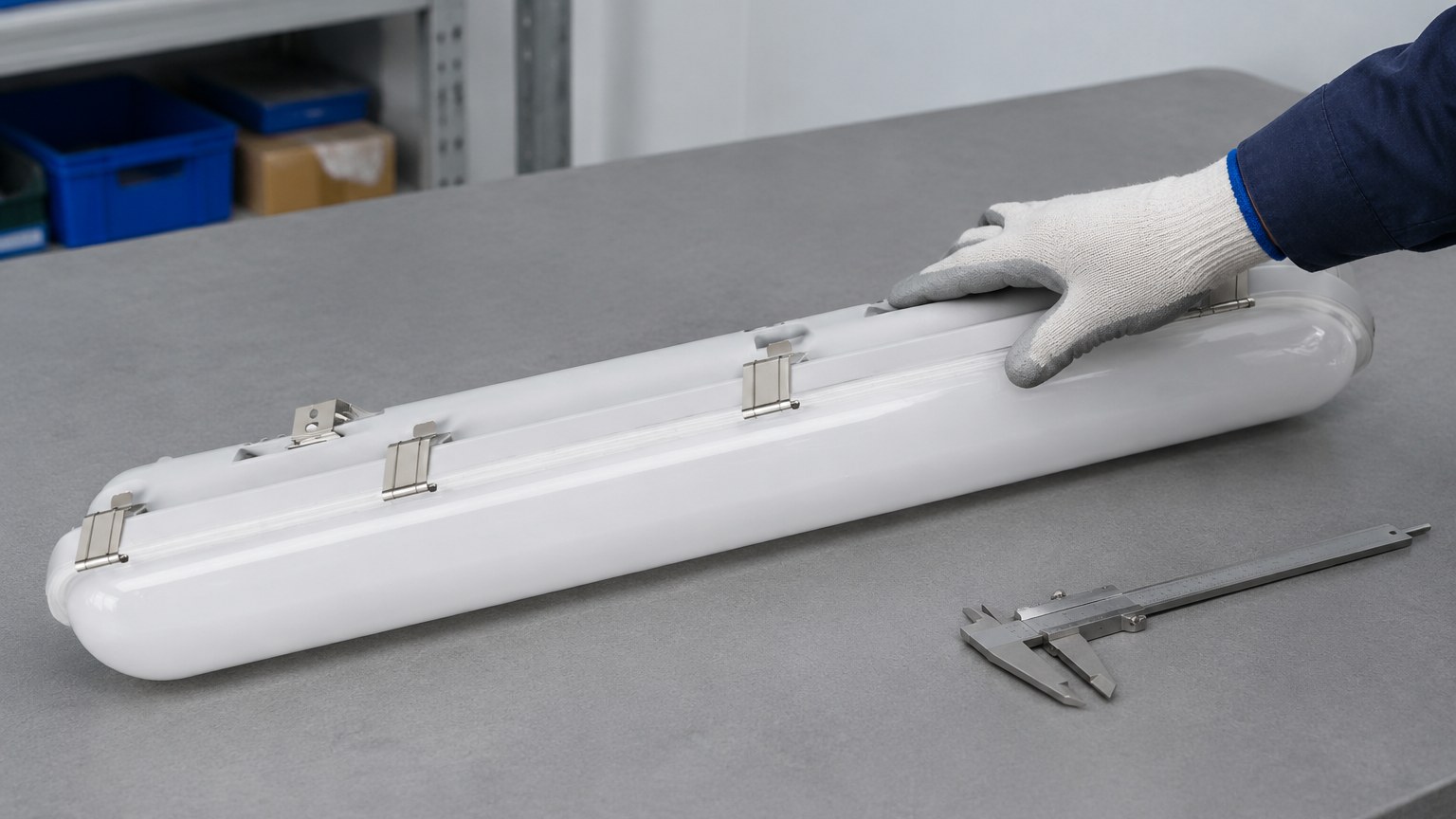
These metric labels are shorthand, not dimensional tolerances or a list of available CoolShinePro models. A 4ft fitting is not guaranteed to measure exactly 1,219.2 mm, and a product described as 1,200 mm is not automatically interchangeable with another supplier’s 4ft housing.
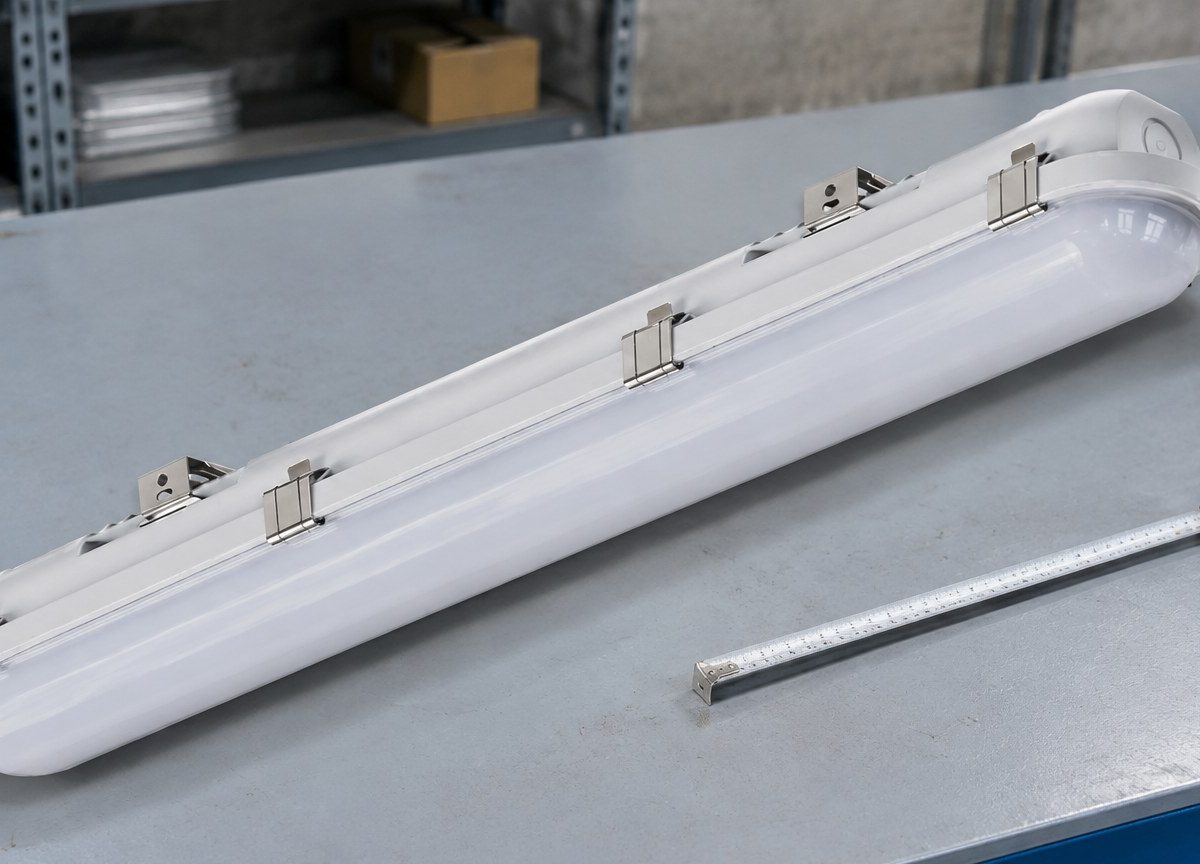
Use the dimensional drawing to fix overall length, width, height, mounting centres and the space occupied by the approved cable-entry arrangement. A replacement may fit the old visual footprint while missing the existing support positions.
Match length to the available installation and service space
Consider a project with 1,350 mm of usable longitudinal space. If its agreed installation brief reserves 50 mm at each end, the remaining body allowance is 1,250 mm. A selected 1,200 mm body can pass that preliminary length check; a 1,280 mm body cannot. These allowances illustrate a project brief, not a manufacturer clearance requirement.
Now suppose a fitting has a 1,230 mm body and its documented entry arrangement needs 80 mm of extra longitudinal space. The assembly requires 1,310 mm, even though the catalogue calls it 4ft. Comparing only its body with a 1,250 mm envelope would produce the wrong decision.
| Installation example | Chosen usable envelope | Assembly assumption | Preliminary outcome |
|---|---|---|---|
| Short service recess | 700 mm | 640 mm body + 40 mm entry allowance | 680 mm fits the stated envelope |
| Restricted replacement position | 1,250 mm | 1,230 mm body + 80 mm entry allowance | 1,310 mm does not fit |
| Clear linear service position | 2,600 mm | 2,450 mm body + 100 mm allowance | 2,550 mm fits the length check |
All three are hypothetical screening examples. They do not establish structural support, electrical suitability or approved mounting for a specific fitting. Check those separately against the actual assembly instructions.
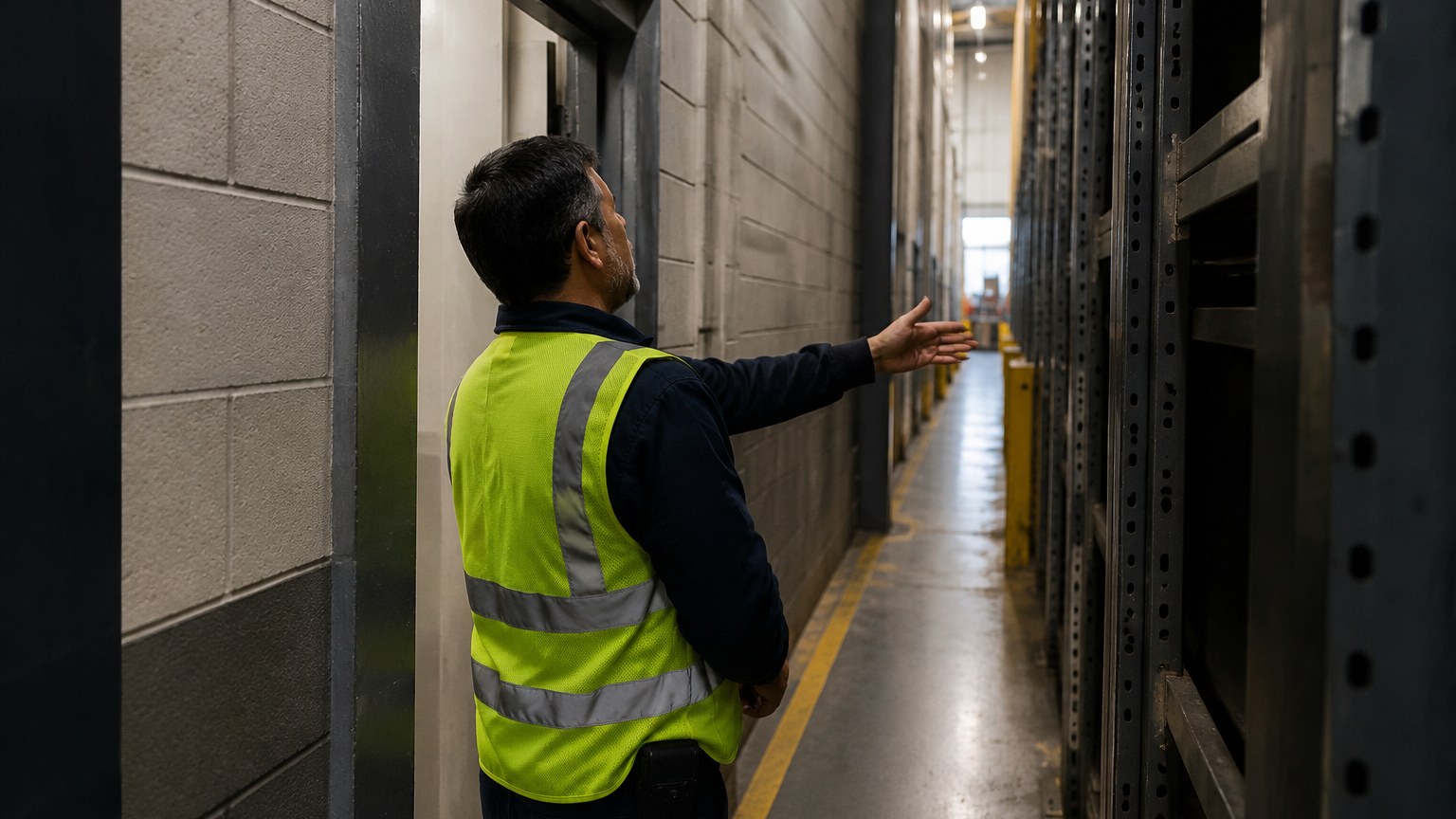
Maintenance access can change the answer. A long fitting may be awkward to remove through a narrow door or around fixed machinery. Review the access route with a full-size sample or dimensioned handling envelope before standardizing the project on one length.
Compare complete-fitting lumens before reducing the quantity
An 8ft vapor tight light fixture does not automatically replace two 4ft fittings. The output, distribution and mounting positions determine whether it can provide the intended lighting result.
The following arithmetic example assumes an approved layout can use either option:
| Proposed arrangement | Quantity | Assumed delivered output each | Assumed input each | Total output | Total input |
|---|---|---|---|---|---|
| Shorter-fitting arrangement | 8 | 4,320 lm | 36W | 34,560 lm | 288W |
| Longer-fitting arrangement | 4 | 8,640 lm | 72W | 34,560 lm | 288W |
The longer arrangement has fewer fittings but no energy saving in this example. Its 72W and 8,640-lumen figures are comparison assumptions, not specifications for an offered CoolShinePro 8ft product.
Equal total lumens also do not guarantee equal lighting between positions. Longer gaps, shadows and mounting height can alter the minimum illuminance and vertical visibility. Request calculations using the actual photometric files and the same room geometry before accepting a quantity reduction.
For an existing fluorescent installation, keep the technology decision separate from the length decision. Our integrated LED versus T8 buying guide explains why similar-looking enclosures can require different electrical and maintenance arrangements.
Identify which length suits each purchasing situation
A shorter fitting can suit a confined service position or a localized lighting requirement when its documented output and distribution are sufficient. It may also make access easier. More short fittings can, however, mean more installation positions and individual assets to maintain.
A 4ft configuration can be a practical candidate where the physical space and required photometry suit that format. CoolShinePro’s documented 4ft 36W vapor-tight fixture provides a real product reference with PC housing and diffuser, IP66, and 200–240V AC at 50/60Hz. Confirm its final dimensions and configuration on the order schedule.
Its stated 120 lm/W gives a 4,320-lumen arithmetic reference at 36W. The measured report for the ordered version should establish the output used in the lighting design. The calculation is not a separate photometric test.
A 5ft or 8ft proposal deserves consideration where fewer installation positions, the required output and the available service space support it. It still needs a documented product offer. Neither the real 4ft reference nor the length comparison establishes availability of every other size, voltage or control package.
Avoid choosing a longer fitting merely to make an aisle look continuous. A visually neat line can still leave the working plane or shelf faces poorly lit. Our warehouse racking and picking guide addresses those task-related checks.
Include handling, support and shipment scope
For a hypothetical project requiring 100 shorter units or 50 longer units, list the handling and mounting method for each offer. Fewer units can reduce some installation tasks, but a longer assembly may need a different lifting or support procedure. Price that procedure from the actual installation plan rather than assuming labour scales directly with quantity.
Check the maximum permitted support spacing and bracket arrangement on the selected manufacturer’s drawing. Do not invent an intermediate bracket or drill the enclosure to make an existing support work. The mounting method and the integrity of the enclosure belong to the complete assembly.
Shipment planning should use packed dimensions, not nominal luminaire length. A 2,400 mm-class product may require a longer carton and a different freight handling arrangement from a 1,200 mm-class product. Ask for carton quantity, outer dimensions and gross weight for each size before comparing delivered cost.
For spares, an illustrative 3% quantity allowance means 3 spare units for 100 fittings, but 2 units after rounding up for 50 fittings. That is an inventory calculation, not a recommended failure rate. Include the correct driver, cover or replacement-unit strategy for each actual model.
Build a multi-size order that the supplier can manufacture correctly
Keep length, power, supply and controls as separate fields. A sample schedule might contain 24 compact fittings for service positions, 60 selected 4ft fittings for general areas, and 16 longer-format fittings for verified clear spans. The total is 100, but it is not one interchangeable SKU.
Assign an order code and location list to each configuration. Keep selected CCT, dimming interface, mounting parts and cable-entry accessories on the same line. If a supplier proposes a different body length or driver, record the change before sample approval rather than accepting it as an equivalent description.
For the initial sample review, check the exact body envelope against the site drawing and confirm that the unit can be moved through the intended maintenance route. Inspect the supplied mounting components and enclosure closure without inventing installation alterations.

Send CoolShinePro your quantity split, available dimensions, destination supply, layout and performance brief through our contact page. Use the 4ft bulk-buying guide for that documented product family, and request separate confirmation for any additional length. The right size is the one that fits the complete project, not simply the longest body in the comparison.