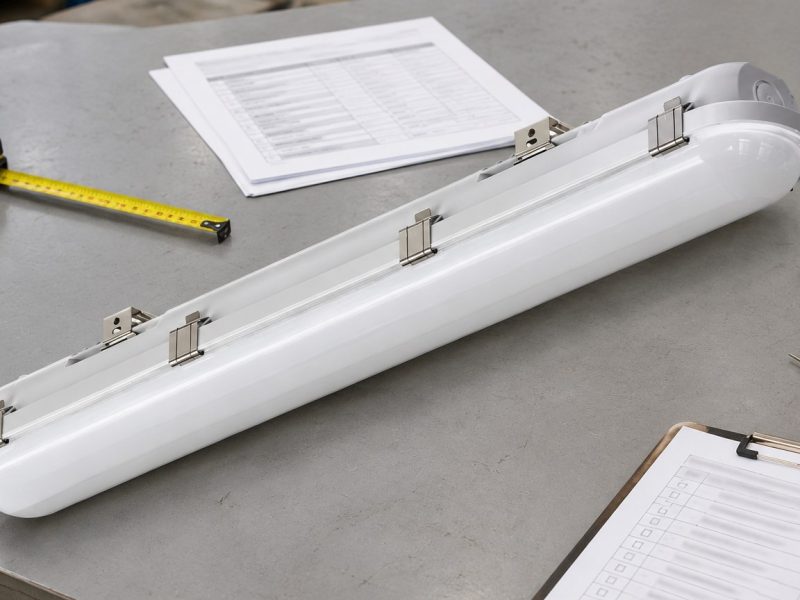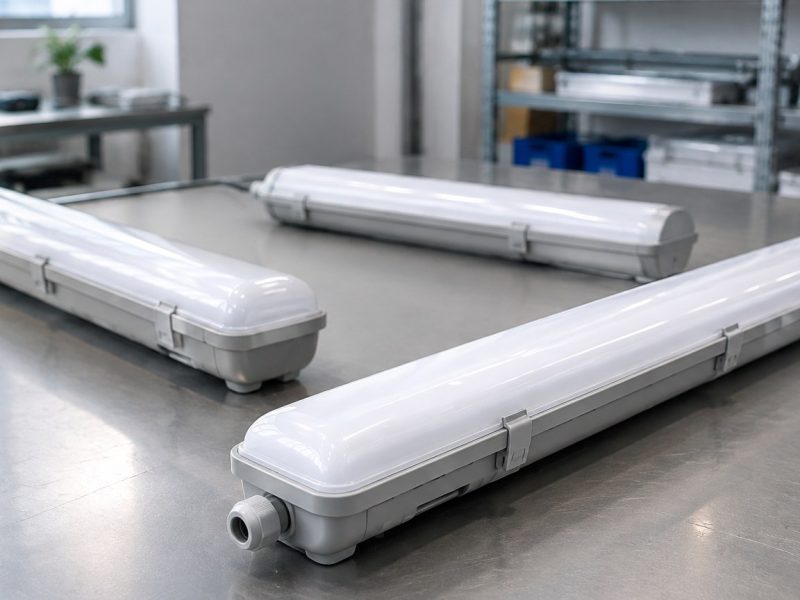

A 120–277V vapor-tight LED fixture can simplify a project with more than one supply voltage, but only if the exact ordered configuration covers every circuit on the schedule. Ask for the complete fitting label and driver identifier before approving a sample.
Turn the electrical schedule into a quotation matrix
| Nominal circuit voltage | Example offer A: marked 120–277 V AC | Example offer B: marked 200–240 V AC |
|---|---|---|
| 120 V | Within marked range | Outside marked range |
| 208 V | Within marked range | Within marked range |
| 240 V | Within marked range | At marked upper endpoint; verify conditions |
| 277 V | At marked upper endpoint; verify conditions | Outside marked range |
These examples only compare nameplate ranges. The project electrician must confirm the actual supply, wiring arrangement and tolerances using the project documentation. A voltage falling within an example range is not approval to connect the equipment or confirmation that the assembled fitting is listed for the installation.

Check current and controls separately
For a simple estimate, a hypothetical 36 W input load at 0.90 power factor draws about 0.33 A at 120 V and 0.14 A at 277 V. This uses input watts divided by voltage and power factor. Real current and power factor can vary with voltage and dimming. Use published input current and inrush for circuit and control design; steady-state current does not tell you how many drivers a relay can switch.
A 120–277 V supply label does not identify a dimming protocol. Ask whether the specific driver is fixed output, 0–10 V or another interface, then match the control wiring and supported operating range. For a hypothetical 48-unit retrofit split across four circuits, an average of 12 per circuit is a planning count, not a breaker or switching-capacity calculation.
Confirm the exact assembled fitting
A driver family may be offered in wide-input versions; MEAN WELL’s driver catalogue provides examples. A driver document does not cover the complete fixture, emergency configuration or installation method. Match the complete luminaire label, driver revision, mounting arrangement and applicable approval documents to the quotation.

Do not infer 277 V support from a product photograph, a similar SKU or a different regional offer. For outdoor or wet areas, confirm the applicable environmental designation and supported cable entry independently of supply voltage.
Make the sample representative of the purchase
Give each voltage and control combination its own line in the sample schedule. For example, a project using 24 fittings on 120 V and 24 on 277 V should verify both operating conditions rather than approve only the first sample installed. Ask the qualified commissioning team to record start-up, control response and any differences in the documented configuration under the approved procedure.

Request a model and driver revision on the purchase order and require written review of substitutions. If only some circuits qualify for a common SKU, keep the other circuits separate in the quotation. After checking electrical fit, use our vapor-tight retrofit payback guide to compare energy and access costs.